These strange humanoids can be found wherever the veil between worlds is at its thinnest. They seem drawn to the magical energies that abound in such places.
Don't let their small stature fool you. They have incredible strength and can carry many times their own bodyweight.
Pech are normally not aggressive, but when riled up they will band together and hunt down their attacker. Under normal conditions they avoid people at all costs.
Pechs are notoriously avaricious, and will loot anything not nailed
down, though they prefer precious things. It is said that if you feed this desire for material wealth it could be possible to befriend one. Once befriended they often carry wondrous objects that they might be willing to part with.
It should be noted that such 'friendships' seldom last long.

Greatwood Trees
These large and majestic trees can be found dotted all over the countryside.
Their wood is able to absorb impressive amounts of magic making it a popular component in the crafting of magical devices.
Silverwood Trees
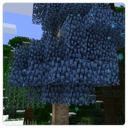
These rare and magical trees are a wondrous sight. Their leaves shimmer with magical energy and their pale, soft wood is valued for its purifying properties.
The trees magical nature is such that aura nodes often form within their hearts - this feature alone makes a silverwood sapling a prize beyond measure.
Shimmerleaf
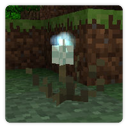
The strange, glowing flowers only grow in the shadow of Silverwood Trees. They can be harvested and pulped to produce quicksilver.
Cinderpearl

Found only in the hottest of climes, these plants burn with elemental fire. They can be harvested and ground to produce a fine powder akin to Blaze powder.
Mana Pod
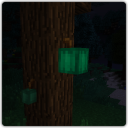
This strange, pod like plant is only found growing on trees in magical forests. They grow very slowly and when harvested usually only yield one or two beans.
These beans, known as Mana Beans, contain concentrated amounts of essentia. They can also be consumed, though the results are often a bit unpredictable.
They can be replanted, but cultivation is difficult and time-consuming.
Wild mana pods usually only produce primal aspects, though it is said that planting beans adjacent to existing ones sometimes result in beans with compound aspects.
Thaumcraft adds several unique enchantments.
Haste
This enchantment can be applied to footwear of all types and increases the wearer's land speed. The higher the enchantment level, the greater the speed bonus granted.
Repair
This enchantment slowly repairs the durability of items by drawing vis from wands in your inventory. The vis cost is determined by the value of the item.
The higher the level of the enchantment, the quicker this takes place. This enchantment can only be applied to items made with Thaumcraft, and even then not all of them.
Infused Stone
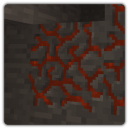
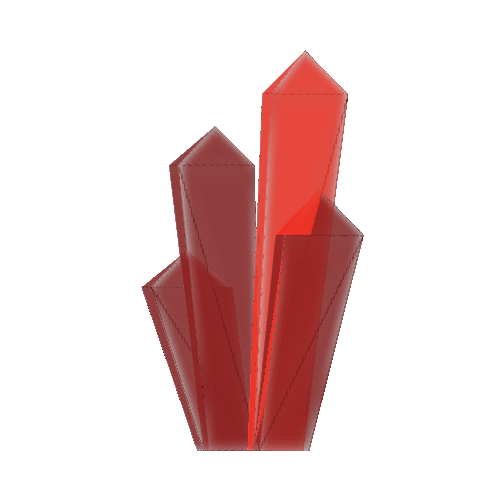
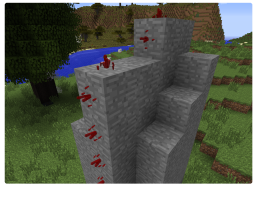
On occasion there is so much primal energy in an aura that it will settle into solid stone to form Infused Ore. The magic forms crystals within the rock that can be harvested.
These crystals have various elemental properties and have many uses in Thaumaturgy.
There are six types of infused stone, one for each of the Primal Aspects.
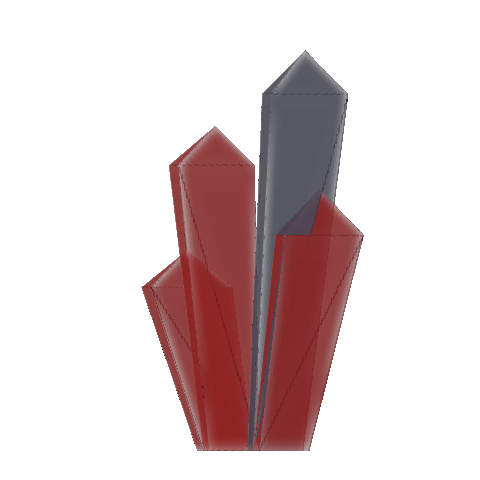
They can be combined together to form crystal clusters. Crystal clusters have no special properties beyond adding a touch of class to any home. Breaking a crystal cluster causes it to shatter into its component crystals.
Cinnabar
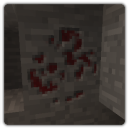
This reddish ore is found deep underground and when smelted produces quicksilver.
Amber
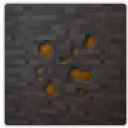
This ore is found near the surface and when mined drops chunks of amber.
To craft the Thaumonomicon, you must simply use your wand on a bookshelf placed in the world.
The Thaumonomicon is a reference book of all things thaumaturgical. It lists all the discoveries you have made so far and gives you a general impression of how many there are still to be made.
Whenever you successfully research something and use the scroll, it will automatically be added to this book. You can then browse through the discoveries and click on them to be shown more detailed information regarding them as well as any crafting recipes associated with those discoveries.

In your travels you might happen upon fragments of ancient and lost knowledge. On their own they are only worth a few research points when used, but if you gather enough of them together you might gain unique research that you can pursue. Usually the research they reveal cannot be gained through normal means.
The fragments of knowledge can on occasion lead to a false theory, but this will be revealed when you attempt to research it. When this happens most of your knowledge fragments will be returned to you and it usually means you have exhausted all current avenues of research into lost knowledge.
The Aura is a field of magical energy prevalent throughout the world. Its origin is unclear. Some believe it is the accumulated life force of living beings, while others believe it to merely be another type of energy seeping in from some other place. The last theory seems to be most likely, as the aura is often found surrounding a node of concentrated mystical energy known as an Aura Node.
Each aura node has a base amount of magical energy it can contain and this energy is aligned to one or more aspects. It is usually aligned to Primal Aspects, but rarely a node may contain Compound Aspects.
The aspects within an aura node can be tapped by a thaumaturge for his own purposes. The simplest way to do so is with the use of a wand.
Energy that has been harvested in this manner is known as vis.
Aura nodes are hard to see with the naked eye, but faint glimmers of light often betray their presence. The Thaumometer makes nodes slightly easier to find, as looking through its lens makes them clearly visible.
Important: Caution must be taken when draining a node. There is a small chance that when a specific type of aspect within a node is completely drained, it may
disappear or harm the integrity of the node.
It is possible for the node to disappear completely if all the aspects are used up.
Fortunately most nodes replenish their aspects over time and if properly maintained can provide a clever thaumaturge with all the vis he could want.
Nodes react in interesting ways to other nearby nodes and bigger nodes tend to drain the vis out of their smaller neighbors to increase their own girth.
Every item, object or creature is bound by varying mystical elements known as aspects. Aspects describe the object's makeup and bent towards the magical elements. A simple stone may possess the aspect of Terra while more complex items like trees or even creatures can be made up of various different aspects in varying amounts. There are close to 50 known aspects with more being discovered all the time.
There are two main types of aspects: Primal and Compound.
Primal Aspects are the most basic types of aspects and there are only 6 of them: Aer (air), Terra (earth), Ignis (fire), Aqua (Water), Ordo (order), Perditio (entropy).
These form the basic building blocks of all other aspects.
Compound Aspects are built from two other aspects. The simplest compound aspects are made from two primal aspects, but it is possible to have incredibly complex compound aspects made from successive layers of simpler aspects.
The simplest example of such a compound aspect, is the aspect of Victus (life), which is a combination of Terra and Aqua.
To view what aspects an item possesses, simply hover your cursor over the item and press sneak (shift), and you will see what aspects that item has and what amounts of each. You will first need to study the item however, until then the aspects will remain unknown.
Aspects that have somehow been separated from their object and purified is known as Vis and is very valuable: both as a crafting ingredient and as a subject for magical research.
Vis is most often bound into wands, but it is also possible to store it as a magical liquid. Vis stored as a liquid is known as Essentia.
Before you can build most thaumaturgical items and blocks, you first need to discover how to do so. There are several steps in this process:
(1) Exploring the world and examining blocks, items and creatures with a Thaumometer
(2) Taking the research points you gathered from the first step and expanding your aspect knowledge with the Research Table
(3) Using the aspects you know and discovering practical knowledge and recipes with the Research Table.
(1) Exploration
You cannot perform research without research points, and the best way to gain research points is by exploration and examining objects in the world.
The first thing you will need to do is construct a Thaumometer (see next page). By pointing the Thaumometer at objects or creatures and holding the right mouse button you will start examining them. The process does not take long, but your movement speed is reduced while it is occurring.
Once complete the Thaumometer will display what aspects the object contains. In the bottom right of the screen you will also see a summary of the aspects and research points
you discovered.
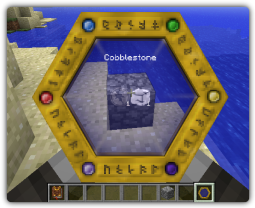
You will initially not be able to examine all objects since you have not discovered their component aspects. For example, an object containing the Lux aspect can only be examined if you have previously discovered the Lux aspect, or know
the two aspects that combine to create it.
The very first time you discover an aspect by examining something you gain two more research points than you would have normally.
Objects and creatures can usually only ever be examined once.
Occasionally examining something will reveal additional clues and insights into thaumaturgical research, unlocking subjects that you can research further.
Research discovered in this fashion will have amber icons.
(2) Combining Aspects
Once you have gathered some research points you can attempt to combine them into compound aspects within a research table.
To craft a research table simply place two tables next to each other and click on them with a set of Scribing Tools. The recipe for tables is listed under the Artiface research category.
If you open the research tables inventory, you will see an interface as pictured on the right.
The scribing tools you used to craft the table will be located in slot 1.
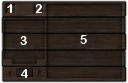
You should see all the primal aspects (and possibly some compound aspects) listed in the area marked 3 with varying amounts attached to them. When you enter a world for the first time, every player is assigned a small pool of primal aspects to get them started.
If you had done some exploring with
the thaumometer beforehand then you might have a significant number of primal and compound aspects listed here.
You can now start combining aspects into more complex compound aspects but simply clicking on those you wish to combine or dragging it to the runic circles in area 4. The selected aspects will appear in area 4 and when you have two selected pressing the purple button will attempt to combine them. If successful you should see what was gained in the bottom right and it should appear in area 3.
The component aspects are consumed even if the combination did not result in valid compound aspect.
(3) Primary Research
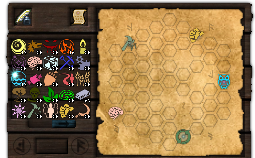
You need to be carrying a set of scribing tools and paper for this step.
If you open your Thaumonomicon you will see all the knowledge have and also all the knowledge that you are now able to pursue.
Flashing square or round icons represent primary researches.
If you can read their title (instead of seeing strange runes) you are simply able to click on them. Paper and ink will be consumed from your inventory and you will gain a research note. You can now take this research note to the table to start researching it by placing it in slot 2.
Section 5 will now display a sheet of paper covered in hexagonal tiles with aspect icons around the outer edge. If you see question mark icons it means you do not know that aspect yet and you will need to learn it first.
To complete your research you simply need to connect and activate all the aspects. You do this by dragging an aspect to a hex adjacent to it that is either composed of the target aspect, or can be combined with another aspect to form the target aspect.
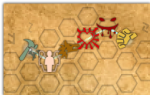
Placing an aspect consumes one research point. If you make a mistake you can click on the aspect to remove it, but you will not regain the research point.
You continue doing this until you have formed a pattern connecting all the starting aspects. The outer aspects need not be connected to all the others, they simply need to form a connected whole.
Once this is done the research will complete and the research note will turn into a discovery.
NOTE: Placing and removing aspects from the hex grid consumes ink from your scribing tools. If it runs out you will not be able to proceed until you refill it.
Secondary Research
Hexagonal icons indicate Secondary research. Much like primary research you just need to click on them. However instead of gaining a research note, you will simply learn the research directly. Secondary research does have an aspect cost you need to pay, but they do not require you to be carrying scribing tools or paper.
3
3
3
3Usually the process of drawing vis from a node with a wand is quite slow... but not anymore.
You have discovered a more efficient way of tapping into aura nodes, resulting in a doubling of the vis draw rate.
3
3
3You have become more efficient at performing research.
Whenever you remove an aspect that you placed in a hex, there is a 25% chance that you will regain the research point.
You are also able to see what aspects you need to combine to create an aspect you are hovering over.
3
3
3You now have better control over the amount of vis you draw from nodes. You will always leave at least one vis of each aspect in the node, unless you are sneaking.
Be warned, this level of control is not possible when using wands crafted from normal wood and iron.
Warp
Many believe man was not meant to meddle with magic, and nothing gives more credence to this than the existence of Warp.
Researching forbidden magics or crafting objects of a questionable nature tends to distort a thaumaturge's view of reality, twisting both their minds and their bodies. This effect is called Warp.
While some warp gained is temporary and will fade over time, there is no known way to get rid of permanent Warp once it is gained and a thaumaturge who chooses to ignore the dangers in the pursuit of power
often finds himself on a slippery slope.
Warp usually manifests as minor lapses in concentration, physical pain or hallucinations.
These are more than merely mental though, as the visions sometimes impart useful knowledge or seeming hallucinations prove to be frighteningly real.
Flux
If Warp is the mental manifestation of magic gone wrong, then Flux is its physical manifestation.
Flux can manifest in three ways: a liquid, a gas and a physical malady. The first two manifestations are considered annoyances by most thaumaturges and is often the result of wasteful use of magic. It is not particularly hard to clean up, but coming into contact with it often causes the third manifestation: Flux Flu
Flux Flu is not particularly dangerous, but while a thaumaturge is suffering from it he finds it difficult to focus vis which often leads to increased vis usage to get something done.
3
3
3There comes a point in any thaumaturge's career where he is unable to progress with research due to his lack of knowledge.
One possible recourse is the Deconstruction Table. The table allows you to break down objects into their simplest parts which you can examine. There are limits however - the table breaks compound aspects into their component aspects until only primal aspects remain. During this process much knowledge is lost and at best the thaumaturge can hope for is a single piece of primal knowledge.
For example iron (Metallum)
20will be simplified into Terra and Ordo, only one of which will have a chance of being discovered.
It is also fairly slow and the fewer aspects and object has, the lower the chance to discover something.
6
3
3
3You have added further refinements to the methods you use to tap aura nodes.
You are now able to draw vis three times faster than normal.
6
3
3
3You have become even more efficient at performing research.
Whenever you remove an aspect that you placed in a hex, there is a 50% chance that you will regain the research point.
Additionally there is a 10% chance that whenever you place an aspect that it will not cost any research points to do so.
Lastly you are able to combine aspects in the research table by shift-clicking on the aspect you wish to create. If you have enough of the component aspects they will automatically combine to create the clicked aspect.
6
3
3
3Warded jars have proven themselves capable of storing all manner of mundane and mystical things, and you believe you have discovered another use for them - trapping aura nodes.
By constructing a large version of a jar around a node and enacting the proper mystical formula with your wand, the node will become trapped inside the construct which will quickly shrink to a more manageable size. The jar can then be safely picked up and moved around, but the initial trapping spell does have a very good chance of damaging the node.
The node is also frozen at the state it was in when trapped, and will
70
70
70
70
70
70never again be able to recharge any vis it was missing.
While trapped the node is kept suspended and will not regenerate vis, nor can vis be drawn from it.
It is possible to free the node from the jar by placing it in the world and clicking on it with a wand. The jar will be destroyed in the process.
Much of this book is written in a spidery and unintelligible script, but what you do understand offers some strange insights into the goals of the Crimson Cult.
Their origins are shrouded in mystery, but it seems their goal is the perfection of a ritual they refer to as "Apertis Oculis" - Opening the Eye. What it does is unclear, but you doubt it is anything good.
Interestingly enough, you think thaumaturgy might offer the missing pieces they have so long sought. Obviously only a madman would pursue this line of study...
6
3
3
3
3You have discovered a way to copy completed research note.
When you complete research or place a completed research note in the research table you will see a star icon. Clicking this will create a copy of this research as long as you are carrying paper and ink and have enough aspects available.
The more copies are created of that research, the more expensive copying it will become.
3
6
3
3Most of the time a single wand is more than enough for any thaumaturge, but there are occasions that the vis it stores just isn't enough. Carrying more than one wand would solve this, but experimentation has shown that there is another way.
By crafting an amulet capable of storing vis, you will be able to recharge wands and other items in the field while it is being worn.
Your success has been mixed however. You can only recharge wands while holding them in your own hand and even then the recharge rate is slow.
24
64
64
24However the amulet is able to act as a good power source for other things like the Repair enchant or runic shielding.
The amulet can only be recharged in a wand pedestal or from nearby vis relays.
8
8
5
5
5Wand foci are capable of amazing feats, but they aren't very flexible. A single focus is seldom capable of performing more than a single function.
You have discovered a way to upgrade basic foci to alter the way they manipulate magic. You simply need to place a focus in a Focal Manipulator and choose the upgrade you wish to apply to it. You also need to provide it with vis from relays and spend experience points to get the process started, but after that it is a simple matter of waiting.
Each focus can be upgraded up to five times,
32
32
32
32
32
32but each rank is doubles the cost.
While some upgrades can be applied multiple times or at any rank, many foci have upgrades that can only be applied at certain ranks or only if certain requisite upgrades had been taken at lower ranks. Experimentation is encouraged.
Upgrades are permanent - you are not aware of any method to remove unwanted upgrades so care must be taken when choosing them.
5
5
5This upgrade changes the summoned bats into vampire bats. Not only will they suck the life out of their target to replenish their own, but some of the stolen life force is given to their summoner.
6
6
6
3
3In your travels you have discovered several nodes that contain compound aspects, but as yet there has been no way to tap this rich source of vis. Until now.
This focus can be placed on top of a wand recharge pedestal which will allow any wand it contains to siphon off the compound vis from nearby nodes. Unfortunately each point of compound vis is broken down into a single point of primal vis and all the excess energy is lost. However it is a good start and you are sure you will discover better ways to access this resource.
10
15
10
3
6
3
3Your trips onto the Nether have taught you to fear the tiny terrors known as Hellbats. Now you have discovered a way to summon the little terrors and send them after your enemies. Excellent.
25
15
15
25
6
3
3
3Traveling around the countryside to recharge your wand is all good and well, but an automatic way of doing it would be much better.
This specially crafted pedestal does just that - any wand placed in it will automatically draw vis from nearby nodes.
Nodes will not be fully drained unless it is a poor quality wand crafted from iron or sticks.
10
15
15
3
3
3
6An annoyance for any thaumaturge that performs regular arcane crafting is to constantly keep his wand charged.
Now that you have found a way to draw vis directly from nodes you are able to craft a Vis Charging Relay. This functions like a normal relay, but is designed to be placed on top of an arcane crafting table. It will draw vis from the relay and recharge wands placed in the table.
The only drawback is that it recharges much slower than it would from a wand recharging pedestal or doing it by hand.
16
16
16
3
3
6Without vis nodes thaumaturges would not even be able to perform the simplest of tasks, but the nodes themselves have several limitations that make their use impractical for extensive operations. Foremost amongst these limitations is the fact that they are easily depleted and it takes quite some time for them to once again gather energy from mystical source they are connected to.
You think you may have found a way around that limitation. In effect nodes are tiny gateways to a mysterious font of mystical energy around which the energy slowly accumulates in the form of Vis. The gateway is so small that only a tiny
32
32
32amount of energy leaks into our reality. By levering open this doorway you can cause vis to pour forth in a torrent.
This is even more dangerous than it sounds however and careful steps must be taken during the entire process.
Firstly the node needs to be stabilized during the entire process. Once that is done you need to craft and place a Node Transducer above the node. When you apply a redstone signal to the transducer the node will begin converting to an energized node and quickly lose its stored vis in the process.
The process takes some time, but when it is done the node will
change into an energized node. Caution should be taken to keep both the stabilizer and transducer active from now on.
Energized nodes no longer store or recharge vis, nor can vis be drawn from them with a wand or other means. Instead they produce a steady supply of CV (centi-vis, or a hundredth of a vis) each tick. This energy can be tapped by placing vis relays near the energized node.
Each relay acts as a conduit for CV and any number of relays can be placed within 8 blocks of an energized node. Relays also transfer energy to each other allowing you to create a network that transports vis to
8
8anything that needs it, like the Infernal Furnace.
Relays use a branching system, so each relay can have only one source (either another relay, or an energized node), but may have multiple child relays that branch off it.
You can also 'tune' a relay to one of the primal aspects by using an appropriate vis shard on it. Clicking on it with a wand will also cycle through the possible attunements. This does not limit what vis can flow through that relay, but does prevent it from connecting to any other relay except untuned ones or ones tuned to the same primal.
The amount of energy a node produces per tick is finite so attaching too many devices to a single source might exceed the amount of CV it can produce.
It is possible to turn an energized node back into a normal node. Simply cut the redstone signal to the transducer and it slowly turn it back into a normal node. Caution should be taken however since the node will be completely drained of vis and thus runs the risk of being damaged.
3
3
6This focus is capable of hurling chunks of ice.
Care must be taken when aiming, as the ice chunks tend to bounce off solid objects. This can be used to your advantage however as you can bounce the shards around corners, or even hit multiple foes.
10
10
10
3
6
3This focus is capable of focusing elemental energy into bolts of lightning that you can hurl at your enemies.
10
10
10
4
4
4This handy device has several beneficial effects if placed below a node.
Firstly it prevents the node from draining vis from other nodes, or being drained in turn. Secondly it prevents unstable nodes from losing their vis and it has a tiny chance of eventually removing the unstable condition completely. Lastly it has a very, very small chance of turning fading nodes into pale nodes.
This requires power however and the Node Stabilizer draws this from the node itself. It does not draw enough to reduce the vis of the node, but it does halve its normal recharge rate.
32
32
32Applying a redstone signal will switch the stabilizer off.
6
3
3
3This powerful focus has a very interesting ability. When used on a block it will create an invisible, protective barrier around that block. From that point on the block will not be able to be removed or destroyed until you once again use the wand on it.
The focus can be used on most simple blocks and they will retain many of their normal properties, though while warded those blocks will effectively become frozen in time.
While holding a wand with this focus you will be able to see all blocks that you (and only you) have warded.
25
25
25
10
9
6
6
6Advanced Node Stabilizers perform all the functions of the lesser versions with a few major differences.
Firstly they still prevent lesser nodes from having their vis drained, but it does allow stabilized nodes to drain the vis from lesser ones.
Secondly it has a higher chance to improve unstable and fading nodes.
Unfortunately this costs a lot more power from the stabilized node - still not enough to drain vis from it, but even the brightest node will have its recharge rate almost completely negated.
32
16
16
16
3
3
3This focus turns your wand into a tool capable of moving vast amounts of earth and stone with little effort.
Simply point it at what you want to excavate and the magic does the rest. Tougher materials take longer to mine, and anything other than earth, stone or similar materials will take much longer to mine.
20
5
5
3
6
3You can use this focus to trade dozens of blocks in the world with some you are carrying.
You must first choose the block you wish to change other blocks into by sneaking and right clicking on the desired block. When you then left-click on another block it will turn into the target block. Right clicking will transform a whole swathe of blocks.
You must be carrying enough target blocks, and the transformed blocks will replace them in your inventory. Only blocks with at least one face adjacent to open air or non-solid blocks will be transformed.
15
15
10
3
6
3
3A staff core crafted from reeds can store 175 vis of each type.
Like the wand core it will slowly replenish its vis stores.
14
3
3Some careful experimentation has shown you a way to expand the abilities of even the most basic wand.
By combining crystalline vis shards with quartz crystals and infusing them with magic, you are able to align the crystals into a mystical matrix.
If the proper types and amounts of vis is focused through this matrix, it will reshape the raw magical energies into something useful, controlled, and geared to a specific task.
Adding a focus to your wand is a simple task - simply press F while holding the wand, and any foci you a carrying will show up in a radial menu allowing you to choose from any of the ones you are carrying with a simple click.
Your initial experiments involved the shaping of fire, and the resulting focus proved to be a simple, but useful tool.
It is capable of sending forth a cone of elemental fire, burning all in its wake.
20
10
3
3
6
3You have succeeded in using vis to create extra dimensional spaces. Using this focus on a wall or other surface will create an extra dimensional passage leading to the other side.
This 'hole' only remains open for a few seconds and drains vis from the wand depending on its depth.
Extra dimensional holes cannot be created through certain kinds of matter or particularly complex objects.
25
10
10
25
3
6
3
3A staff core crafted from blaze rods can store 175 vis of each type.
14
3
6
3
3A wand core made from reeds has slightly greater storage potential than greatwood cores. What makes it superior to greatwood cores however is that if the level of Aer stored inside it drops below 10%, it will slowly replenish without the use of a node.
12
6
6
3
6
3
3A staff core carved from bone can store 175 vis of each type.
Like the wand core it will slowly replenish its vis stores.
14
6
3
3Once you have gathered a sizable collection of foci it is quite annoying to carry them all with you. This pouch solves that problem.
Whenever you change the focus on your wand, it will check this pouch first and any foci that get removed will be placed inside it first. You can also right-click the pouch to place or remove foci by hand.
It can also be carried in your belt bauble slot.
10
10
10
3
6
3
3Blaze rods used as wand cores has slightly greater storage potential than greatwood cores. What makes it superior to greatwood cores however is that if the level of Ignis stored inside it drops below 10%, its fiery nature will slowly replenish it.
12
6
6
3
6
3
3A bone used as a wand core has slightly greater storage potential than greatwood cores. What makes it superior to greatwood cores however is that if the level of Perditio stored inside it drops below 10%, it will slowly replenish without the use of a node.
12
6
6The casting wand is your most basic, but also your most important tool. It is what you use to craft objects, activate blocks like the crucible, and countless other tasks.
The most basic wand stores a very limited amount of magical energy (called vis) that it uses to perform its tasks. The replenish the energy in a wand, you must right-click and hold to draw vis from an aura node.
While holding a wand you will see a indicator on the top left of the screen that shows how much vis is stored within the wand.
Holding shift will display exact numbers held by the wand and any possible discounts you have to performing magical tasks.
Wands are always constructed by the combination of a rod and two end-caps. As you progress with your studies, you are sure you will discover different materials that you can use to craft rods and caps to make powerful wands. Only the basic wand can be put together in a normal crafting table. All other wands require the Arcane Workbench and will cost vis to construct.
The basic wand is constructed from mundane wood and iron, both of which make poor materials for working magic.
3
6
3
3A staff core chiseled from obsidian can store 175 vis of each type.
Like the wand core it will slowly replenish its vis stores.
14
3
6
3
3A wand core chiseled from obsidian has slightly greater storage potential than greatwood cores. What makes it superior to greatwood cores however is that if the level of Terra stored inside it drops below 10%, it will slowly replenish without the use of a node.
12
6
6
3
6
3Carved from greatwood logs, this rod has double the vis storage potential of mundane wood, being able to store up to 50 vis of each type.
3
3
3
3Gold is a far superior focusing agent than iron, and wands capped with this material takes no penalty when used to channel vis.
3
3
3
3
6
3
3Wand cores crafted from ice can store slightly more vis than greatwood cores. What makes it superior to greatwood cores however is that if the level of Aqua stored inside it drops below 10%, its icy nature will slowly replenish it.
12
6
6
6
6
6
9Crafting scepters are specialized wands made to be used to craft mystical objects and nothing else. Foci cannot be attached to them, but they have several features that still make them worthwhile using.
Firstly, they have an additional 10% vis discount above and beyond what their caps would normally grant.
Secondly they are able to hold 50% more vis than their cores would normally allow.
Like other wands they can be crafted using most combinations of rods and caps - just a few examples are given on the next page.
1
1
1
1
1
1
6
6
3
3Thaumium is known for its ability to store and absorb magic, so using it to craft wand caps is a logical choice. It is very efficient at focusing vis of all types.
Crafting these wand caps in an arcane worktable is not sufficient - they need to be infused with additional magical energy to make them usable.
6
6
6
12
6
3
6
3
3A staff core crafted from ice can store 175 vis of each type.
Like the wand core it will slowly replenish its vis stores.
14
3
6
3
3A wand core chiseled from nether quartz has slightly greater storage potential than greatwood cores. What makes it superior to greatwood cores however is that if the level of Ordo stored inside it drops below 10%, it will slowly replenish without the use of a node.
12
6
6
6
6
9Silverwood has proved to be an excellent repository of magical energy, and wand cores crafted from it can store up to 100 vis of each type.
9
9
9
9
9
9
9
6
6
9Staff cores crafted from silverwood can store up to 250 vis of each type.
24
3
6
3
3A staff core chiseled from quartz can store 175 vis of each type.
Like the wand core it will slowly replenish its vis stores.
14
3
6
3Wands are the stock and trade of the thaumaturge, but sometimes you want more bang for your buck. Magical staves are basically just bigger wands. They are able to store more vis.
Since they are physically larger and sturdier than a wand, they can actually be used as weapons in an emergency.
Unfortunately this also makes it unsuitable for the intricate workmanship and fine control required by an arcane workbench or similar crafting.
A staff made from greatwood has more than double the vis storage potential of a greatwood wand, being able to store up to 125 vis of each type.
Note: You still need to add caps to a stave rod, just like you would for a wand.
8
5
5
5
5Cleaning the body is easy enough, but once warp becomes a nuisance you need something that can clean the mind as well.
This soap cleans the flesh, but the effects it has on your psyche is what truly makes it special. When used it has a small chance of reducing non-permanent warp and will remove all temporary warp.
Using it while under the effects of a Warp Ward or while standing in Purifying Fluid will increase your odds.
16
16
16
16
3
3
3Pouring bath salts into water is a bit of a chore, but luckily one easily solved with a bit of magic.
You have created a handy machine that when filled with water and bath salts will automatically mix them and pump the liquid into an area above it. The liquid will fill a 5x5 area above the location where the machine is placed.
Additionally, you have found that it can be used to pump nearly any liquid you can fill it with. You can fill it with automation, or by clicking on the block with the appropriate container. Applying a redstone signal will disable it.
16
8
4
3
3
6Void jars function much the same as normal warded jars with one important difference - even when full they are still able to accept essentia, but the excess essentia is simply lost. This allows you to always have some essentia of that type available, but get rid of any excess that may build up.
Like normal jars, void jars can accept labels, but their suction with a label is less than that of a normal labeled jar (about halfway between unlabeled and labeled jar).
5
15
3
3
3
3Warp is a danger for even the most careful of thaumaturges. For those that have done a bit too much dabbling Warp effects are probably more than just an annoyance. Purifying Bath Salts help with that.
Simply tossing these salts into water will turn the water into a silvery, purifying liquid that sooths away the stresses of the day and brings temporary relief from the effects of Warp. It should be noted however the more warp a thaumaturge suffers from, the shorter the duration of this protection.
The salts are quite fragile and will soon dissolve if tossed around haphazardly.
6
6
6
6
1
6
3
6Shimmerleaf is often overshadowed by its mystical neighbor the Silverwood tree, but it has magical properties of its own.
Like the Silverwood, Shimmerleaf flowers have purifying properties that lie dormant. You have found a way to awaken these properties and turn it into an Ethereal Bloom.
Ethereal blooms slowly, but surely, restores land corrupted by mystical means to its former glory - this includes the blight known as Taint. While it cannot combat Taint directly, few tainted growths can survive outside their native environment for long and tend to die back.
16
16
16
8The flower only purifies the land bathed in its light out to a range of about 8 blocks.
Essentia can be stored in Warded Jars.
Warded jars can be placed in world and is able to store essentia virtually indefinitely. The enchantment placed on the jars also makes adding or extracting essentia a breeze.
Jars can be filled from an alembic by clicking with the jar directly on the alembic. They can also be filled and emptied using phials.
What is more they make an excellent storage medium for jams and preserves.
1Shift clicking on jars and alembics with an empty hand will empty them.
As long as a jar contains some essentia, you can attach a Jar Label to it.
This label will 'lock' the jar to that type of essentia and it will not be able to accept any other kind of essentia.
You can remove a label by shift clicking with an empty hand on the side of the jar containing the label. Take care not to shift click on any other side as it will empty the jar as normal.
You can place a label in a crafting bench with a phial of essentia to assign an aspect to it and when placed on an empty jar it will automatically lock the jar to that aspect. The essentia used in the recipe is not consumed.
Placing it on a filled jar will change the label to the jar's essentia type.
A label can be made blank again by simply placing it by itself in a crafting grid.
3
3
3You have mastered the basics of alchemy and alchemical duplication and are now ready to try creating more complex substances from scratch.
You have formulated several recipes that create normally hard to get substances and items via alchemy.
2
2
2
1
1
1Glass phials are capable of holding all manner of liquids and substances, but their most important use to a thaumaturge is their ability to hold Essentia.
5
5
3
5You have nearly mastered the art of turning concrete objects into liquid essentia, so doing the reverse is a simple matter.
The essentia crystallizer draws in liquid essentia from a pipe network and slowly converts it into small shards of crystalline essentia. Crystalline essentia is safe to handle and very stable.
The Crystallizer either ejects the crystals into the world or into a container. It can be disabled with a redstone signal.
Supplying it with terra vis will greatly increase its speed.
5
15
5
3
6
3
3Up to now alchemy has been somewhat of a hit and miss affair - miscounted aspects, degrading essentia and ingredients that require manual labor to mix. This is finally a thing of the past.
The Thaumatorium is a marvelous invention that allows a thaumaturge to select which formula to use and what catalysts to add. It then automatically draws essentia from available sources using tubes. As long as there is a supply of catalyst it produces the required object perfectly, every time.
The crucible that forms its base does not require water, but a heat source is still needed.
15
30
30When you access this device you will see several slots. The top-left slot is where you place the catalyst. Once you have done this you will be able to choose which recipe you wish to craft with that catalyst from a list of possibilities in the top right slot.
The bottom bar shows the essentia required in the order they will be required. It will also display progress bars once the machine is in operation.
The created object is ejected out the front of the device or into an inventory placed in front of the ejection port.
Normally a Thaumatorium can only have one active formula, but by attaching a Mnemonic Matrix to its side you can increase the number of formulas it can keep track.
Each matrix increases the number of formulas by 2.
5
5
5
3
1This flame seems to be fuelled by magic itself. The number of uses for an ever burning flame seems endless, but unfortunately it seems to produce much more light than heat. Despite that it could still prove to be a steady source of energy.
Nitor can also be placed in the world to act as a magical light source.
3
3
3
3
3
3In the future you will definitely need to have ready access to multiple different kinds of aspects - not just primal aspects drawn from your wand.
Using basic alchemical principles you have devised a way to break down objects and convert them into essentia.
The first step in this process requires an Alchemical Furnace. The alchemical furnace works much like a normal furnace by burning coal to produce heat, but instead of smelting ore into metal, it breaks down objects into a slurry of raw, unprocessed essentia.
5
5The next step in the process is to take the essentia slurry and distill it using an Arcane Alembic.
To work, arcane alembics need to be placed on top of an alchemical furnace. The essentia slurry will slowly be drawn into the alembic and the individual aspected essentia separated out.
If the alchemical furnace is being powered by alumentum, this distillation process is much faster.
You can stack up to 5 different alembics on top of a single furnace.
The essentia can then be extracted out of an alembic using phials.
5
5
5
5
5
5
3
3
3There are many substances in the world that are alchemical in nature.
By carefully adding the proper aspects to these substances you should be able to make more of them.
4
4
2
2
1
2
3
1
2
2
3
1By processing and heating flesh in a crucible, you can create a mystical tallow suited for many arcane uses.
This tallow can be used to craft candles. It is also possible to craft different colored candles by combining a candle with a dye in an arcane workbench.
2To craft the Crucible, you must simply use your wand on a cauldron placed in the world.
The crucible is an important tool for any thaumaturge. It allows him to render physical objects into their component Essentia and recombine it again as he wishes.
The crucible needs to be placed over a source of constant heat and filled with water. Once the water starts boiling you simply throw any items you wish into the crucible and they will be broken down into their component Essentia.
If you know the proper formula and the mix of essentia within the
crucible is correct, you can then drop a special item into the crucible known as a Catalyst. The catalyst draws the essentia into itself and transforms into a whole new item that the crucible then ejects.
Any leftover Essentia remains within the crucible for further use, but it is not a good idea to leave essentia within a crucible for too long.
Crafting also uses some of the water within the crucible and you will eventually need to refill it.
Essentia within the crucible is constantly degrading. Compound essentia degrades into one of its component aspects, and Primal essentia simply evaporates.
Beyond the waste of resources, evaporating and degrading essentia can cause many strange side-effects.
You can empty a crucible by shift right-clicking on it with a wand. All the essentia is dumped into the atmosphere... not something you would want to do too often.
There are some basic alchemical recipes that anyone can perform. See the following pages for their recipes.
Balanced Vis Shards
These are normal vis shards that have been alchemically infused with the five primal elements they do not already possess. This results in a shard of crystal that is perfectly resonating with primal energy.
Smelting a balanced vis shard in a furnace creates Salis Mundus (see following pages).
2
2
2
2
2Salis Mundus
Salis Mundus, or Thaumaturge's Salt as it is more commonly known, is crafted by exposing a balanced vis shard to high enough heat that it shatters into a fine powder.
Like its mundane counterpart, Thaumaturge's salt adds flavor (metaphorically speaking) to any magical recipe or formula. It is a strong binding agent, able to hold the most disparate of magical elements together.
3
3
3You have discovered several ways to transport essentia, but none of them has proven useful for large scale alchemical operations - until now.
You have unlocked the key to creating stable and relatively leak-free tubing. While mundane chemicals can be transported in glass, certain types of essentia either dissolve or simply pass right through it. By wrapping the glass in iron and treating it with quicksilver you have managed to protect it from even the most volatile types of essentia. Gold fittings finish off the piping system and make it visually appealing.
5
5The tubes can be connected to all manner of alchemical devices, though warded jars and alembics are their primary targets.
Essentia flows through the tubes whenever something is connected to them that can accept it, like warded jars.
Jars containing different kinds of essentia will only draw their kind of essentia towards them. Tubes however can only draw and transport one kind of essentia at a time - the highest drawing strength will take priority. Without the proper use of valves it is quite easy for a network of tubes to get gummed up. The use of valves is essential.
When you see gasses being vented
5
5from a tube, it means different kinds of suction are interfering with each other. The color gives a clue as to the types of suction.
The essentia valve acts much like a normal length of tubing, except it can be turned off by hand or a redstone signal. When this is done the flow off essentia through it will be cut off.
The Essentia Resonator is handy for troubleshooting your tube network. You can use it on a tube or other essentia using device to see what essentia it currently contains and the suction it is applying.
5
5Tubes can be connected and disconnected from their neighbors by clicking on a section of tubing with a wand.
The wand can also be used to click on the central section to rotate certain tubes like the valve.
3
3
3
3The alchemical centrifuge is a wondrous invention that allows you to break essentia into its component parts.
When compound essentia flows into the centrifuge from below it will be slowly broken down into the primal or compound essentia that it is made from. Only one of the components is created for each point of essentia broken down.
The resulting essentia needs to be drawn from the top of the centrifuge. Because of the idiosyncrasies of the tube pressure system, it would be best to connect a Essentia Buffer to the top of the centrifuge (see next page).
5
5
5The essentia buffer allows you to store a limited amount of essentia - 8 points total, though it can be made up of any combination of essentia types. Like a jar it has suction, though it applies the minimum amount of suction possible (1).
This means that is usually only able to draw essentia from an essentia source it is directly attached to. However tubes can be connect to all its sides, meaning that it is invaluable for getting essentia out of devices like the centrifuges that could contain variable types of essentia.
You can attach bellows to the buffer - each attached bellows increases its suction by 32.
Additionally you can toggle individual connections on and off as with a normal tube, but if you shift click a connection, it will choke the suction back to 1 (blue band) or 0 (red band) on that side.
This allows for some interesting possibilities when routing essentia.
5
5
5
3
1
1Cleaning Taint is one thing, but ever considered spreading it?
By concentrating and collecting the essence of taint into a bottle it is simply a matter of dropping it somewhere to create a patch of taint. It is up to you to decide why you would want to do this.
8
8
1
3
1While creating magical and mundane substances is quite satisfying, sometimes you just want to break things down into their component parts. What is simpler than adding entropic energy to things?
Actually, there is several reasons why this is a bad idea, but what is progress without some risk?
2
1
3
1This substance throbs with fiery energy and it is more than eager to release that energy at the slightest bump. It may be unstable, but it would probably make a good source of fuel.
It is probably not a good idea to throw it against a solid surface unless you enjoy explosions.
3
3
3
3
3
3
3Filtered essentia tubes work like normal tubes, except it is possible to mark them with labels. When marked they will restrict essentia flow through them to what they have been marked with.
Shift-clicking on them with an empty hand will remove the label.
5
16Restricted essentia tubes work like normal tubes, except they halve the any suction passing through them.
Directional essentia tubes only accept suction from one direction. The blue markings indicate the direction from which suction will be accepted.
5
16
5
8
8
3
3
1
1This liquid is so dangerously toxic that virtually nothing can prevent it from dissolving flesh, bone and even harder substances. Nothing alive or that even displays the semblance of life can survive it.
Apart from obvious practical applications, this vile substance has another interesting property: Any essentia a dissolved creature possessed form into crystals that can be harvested.
I will leave it to the reader's imagination what uses those crystals can be put to.
32
32
32
3
2
1Native clusters are rare concentrations of metals in its purest form. You have discovered a way to purify and concentrate normal gold ore into a native gold cluster.
When smelted these clusters produces twice the normal amount of gold ingots.
1
1
3
3Metals have proven to be quite easy to manipulate via thaumaturgical principles. Your first experiments have led to discovery of Thaumium.
Thaumium is the result of infusing base metals with raw magical energy. The result is a metal harder than iron with the ability to accept enchantments beyond that which iron is normally capable of.
A metal such as this has many applications in the crafting of more advanced thaumaturgical devices.
It can also be used to craft tools, arms and armor in a crafting table using the normal recipes.
4
3
3You have discovered a way to multiply gold by steeping gold nuggets in metallum harvested from other metals.
2
1
3
3Native clusters are rare concentrations of metals in its purest form. You have discovered a way to purify and concentrate normal iron ore into a native iron cluster.
When smelted these clusters produces twice the normal amount of iron ingots.
1
1
3
3You have discovered a way to multiply iron by steeping iron nuggets in metallum harvested from other metals.
2
6
3
3
3Some experimentation has led to an interesting discovery - the ability to imprint memories in inanimate objects. Your first attempt at using the discovery is doors, pressure plates and other blocks that remember who placed them.
The door can only be removed with a wand by the person who placed it. Additionally the door will refuse to open for anyone but its owner. The owner can also craft iron or gold keys that will grant others access to this door.
By crafting an iron key and clicking on the door, you will link the key to that door.
20
10
10
5You can then give the key to another person and they will be able to use it on the door to gain permanent permission to open it. They will still not be able to break the door, or grant anyone else access. For that you need the gold key.
The gold key serves much the same function as the iron key, except they can also grant other people iron key access to that door. Only the original owner of the door can hand out gold key access. They are also not able to remove the door with a wand. Only the original owner will be able to do that.
5
5
5
5This pressure plate has a few novel features.
Firstly it has 3 settings that can be toggled by right-clicking on it: It can trigger on everything (like a wooden pressure plate), just you, or everything except you.
Secondly, like all other warded items only you can remove it.
Lastly it can be linked to other players with the use of keys. These pressure plates can be used to open arcane doors as long as someone with access to the plate has access to the door as well.
20
10
5
10Warded glass is a simple cosmetic block, but like other warded objects it cannot be broken except by the person who placed it.
Keys cannot be used to give other users access.
5
10
5
5
3
3
3By altering the magical structure of arcane stone you are able to create a paving stone that adds new bounce to the step of anyone walking across it.
Anything walking across it will have greater speed and agility for a couple of seconds.
10
10
3
3
3You have discovered a way of turning arcane stone blocks into mystical wards that will prevent most creatures from crossing them.
It should be noted that these wards aren't always 100% foolproof and they cannot prevent other players from entering an area, but they keep most common threats at bay. They will also prevent golems from crossing them.
For best results you need an unbroken line of them between the areas you wish to protect and the outside world.
An active redstone signal will disable this block.
10
10The color of the runes above the paving stone indicates its current status.
Purple runes show that it is currently preventing something from passing through.
Blue runes indicates it has been deactivated with a redstone signal.
Red runes shows that something is preventing it from fully warding an area and a gap exists where something might be able to pass through.
3
3
3
3Even the most skilled thaumaturge occasionally leaves a mess in the form of flux. It is a nuisance everyone has to deal with, but this machine removes the drudgery involved.
The flux scrubber, when powered with aer vis, will slowly remove any form of flux within 16 blocks of where it is placed. What is more, it is able to reclaim a small portion of the magic that makes up the flux in the form of praecantatio essentia.
It's internal buffer is very small and it will continue operating even when full, so it must be emptied if you wish to reclaim all the essentia.
16
16
8
3
3
3While not true flight, the Arcane Levitator is the next best thing.
When placed the levitator lifts any item or creature above it up to 10 blocks into the air. A sneaking creature or player will be slowly lowered.
Each levitator placed upon another increases the range at which it can lift entities by 10 blocks, so a stack of 3 can lift entities up to 30 blocks.
Levitators can be deactivated by applying a redstone signal to them.
10
5To create an Arcane Worktable simply right-click with a wand on a table you have placed in the world. The Arcane Worktable serves the same purpose as a normal crafting table, with a few key exceptions.
Apart from normal crafting recipes, it can also craft some of the items unique to Thaumaturgy. To do that you need to place a wand in the top-right slot. This will allow you to craft items that require vis by drawing the energy directly from the wand.
The vis required to craft an item will be shown in the six circular symbols surrounding the crafting grid.
The Research table is created by placing two tables next to each other and then clicking on them with Scribing tools.
The research table is the most important tool for any thaumaturge. It is used to unlock all the hidden secrets of the universe and discover new ways of harnessing magic.
6
3
3The Arcane Bellows performs much the same function as its mundane counterpart, the only difference is that it happily pumps away by itself sending forth a stream of never-ending air.
Attaching it to an Infernal Furnace has shown some interesting results. The elemental infused air not only stokes the flames increasing its smelting speed, but causes them to burn much purer, resulting in a reduction of flux generated and increasing the chance of creating bonus nuggets and other materials when smelting.
10
5They can also be attached to normal or alchemical furnaces to increase their speed.
It is also possible to attach them to crucibles to reduce the time it takes for their water to boil.
Bellows can be deactivated by applying a redstone signal.
You are confident more uses will reveal themselves eventually.
Arcane stone is a basic building material for many complex mystical constructs. It is normal stone that has been seared by elemental fire and strengthened by elemental earth.
1
1
6
3
3
3By harnessing raw Ignis within a furnace crafted from obsidian and netherbrick you have created a highly efficient and fuel free furnace. So efficient in fact, that occasionally it will produce bonus materials in the form of nuggets or other items.
While this is essentially free, it is also very slow unless the furnace gets a new supply of Ignis essentia or vis every now and again. This can be done by any methods you have discovered so far, or still will discover.
50
50It should also be noted that the occasional bit of Flux escapes into the environment.
Items you wish to smelt needs to be dropped into the top of the furnace and will be spit out the front.
The table is more than a simple decorative block - it also serves as a base for other surfaces useful in the practice of magic, like the Arcane Worktable and the Research Table.
The item grate allows you to toggle it open or close it with your hand, or with a redstone signal. If in the open position, any dropped items will simply fall right through it.
Items can also be piped into the top of an item grate using a hopper or other means and if open, it will be ejected out the bottom.
3
3
3
3
3
3
3These arrows are each infused with a specific type of primal energy which gives them interesting and destructive properties
Air Arrow
These arrows crackle with energy. They inflict similar damage to normal arrows, but the magical energy bypasses any kind of armor protection.
Fire Arrow
These arrows inflict pure fire damage and set their targets alight.
8Water Arrow
These arrows inflict normal damage, but chills your target to the bone, reducing their movement speed.
Earth Arrow
These arrows have no special property beyond packing a lot more punch than normal arrows.
Order Arrow
This arrow does a little less damage than normal, but it bypasses armor and leaves your enemy weakened.
Entropy Arrow
This arrow does slightly less damage than normal,
but inflicts a withering effect on whatever it hits.
Primal arrows cannot be picked up from the ground and the Infinity enchantment has only a 1 in 3 chance of preventing a primal arrow from being consumed.
3
3
3The Arcane Ear is a device that is capable of detecting the sound emitted from nearby note blocks. If it hears a note it recognizes it will emit a short redstone pulse.
The Arcane Ear needs to be tuned in a manner identical to note blocks, the tone and note it listens for depends on the material it is placed upon.
10
10
3
3
3You have discovered a way of crafting a bow from bone and infusing it with entropic energy.
The resulting weapon is capable of firing much faster than a normal bow and arrows launched from it travels faster and hit harder.
16
32
3
3
3This mystical lamp can be attached to walls, floors or ceilings and will provide strong and steady light.
Additional sources of light may also appear up to 16 blocks away wherever light levels fall below accepted 'safe' levels. Remember: Only YOU can prevent zombie outbreaks.
These secondary sources of light will disappear soon after the lamp has been removed.
You are sure additional uses for this lamp will present itself, so remember to check here after making new discoveries.
8
8
4
4 Arcane Bore
When attached to the base of an arcane bore, the arcane lamp gains an additional ability: It will light up the tunnel that the bore digs.
Primal Charm
Primal Charms form an important basis for many thaumaturgical constructs. They have no inherent power of their own beyond being able to focus and channel primal energy and essentia.
Rumors persist that these charms have additional powers, but that is little more than hearsay.
25
25
25
25
25
25
10
10This Thaumometer is one of the most useful and important tools in a thaumaturgists arsenal, second only to the wand.
Firstly it allows you to scan objects, creatures or mystical phenomena and determine their magical make-up. You simply need to hold the right mouse button and wait.
Secondly it makes discovering nodes easier, as they become clearly visible if viewed through the Thaumometer's lens - even through solid objects!
3
3
3Building on the basic principles of the Thaumometer, you have begun refining its ability to detect magic into something more... revealing.
This set of mystical lenses will make aura nodes much easier to find along with revealing all manner of hidden things.
They form an important tool in any Thaumaturgist's arsenal.
5
5
5
5
3
3
3
3
3
3You have made an interesting discovery during your study of nodes. Different kinds of nodes emit varying types of radiant energy, but none are quite as distinct as that of Sinister nodes.
The energy emitted by Sinister nodes is quite unique and simple to track. By infusing a piece of flint you think you can create a simple scrying device that will light up whenever it is pointed towards such a node.
The range is limited, but it is a worthwhile invention since you have often found Sinister nodes in the most interesting of places.
8
8
8
8
3
3
3By infusing a thaumium pickaxe with fire shards, you have created a pickaxe that glows with the heat of a forge.
When you mine ore blocks there is a chance that you will mine a cluster instead. Native clusters are much easier to process and produces double the normal amount of metal when smelted.
It can also be used to sound out any surface you right click against to find out what valuable ores, lava or water can be found nearby.
8
8
8If shift is held while using this tool all its special properties are suspended and it functions like a normal pickaxe.
3
6
3
3Unlike the Arcane lamp from which it is made, the Lamp of Growth does not cast much light unless it is provided with Herba essentia. If this is done any plants which grow where its light shines the brightest will grow much faster than normal.
Essentia can be fed to the lamp by attaching it directly to an essentia piping system.
16
8
16
6
6
3Any living creatures bathed in the gentle pink glow of this lamp is immediately placed in a much more romantic mood. If they are able they will seek others of their kind to mate.
This lamp will have no effect if there is 8 or more of a particular species already present.
It requires Victus essentia to function which can be fed to the lamp by attaching it directly to an essentia piping system.
16
16
8
3
3By combining spider silk and wool and infusing it with primal vis, you have created a silky length of magical cloth that would have numerous uses.
You have also discovered patterns to create cloth robes from the magical fabric. These robes have similar protective properties to leather armor, but they are much more durable than mundane materials could ever be.
They also hold mystical enchantments very well and can hold powerful magic much better than even expensive armor.
1
1
1
1
1
1The various pieces of this outfit grant a small discount to the amount of vis drained from casting wands when you use them.
You can dye the armor like you would leather armor.
5
5
3
3
3
6This is a specialized version of the Ring of Shielding.
It has slightly less charge than the ring it is based on, but increases the recharge time of runic shielding by 25%.
You can wear more than one of these rings, effectively halving the normal recharge time.
16
16
64
3
3
4
4This is a specialized version of the Ring of Shielding.
It has slightly less charge than the ring it is based on, but when your runic shielding is breached it will release a pulse of regenerative energy that will last for a few seconds.
This effect cannot trigger more than once every 20 seconds.
16
16
32
32
3
3
3By combining water shards and a thaumium axe, you have created a tool that embodies the aspects of motion and flow.
It functions like a normal axe on all materials except natural logs and trees. When used on them the axe seeks to furthest block of the same type that is still connected to the block you are attempting to harvest and harvests that one instead.
In effect you will chop trees from the top down even if you hit the bottom-most block.
16
8Any wood chopped in this fashion will automatically float towards you.
If you press and hold right click the axe will draw all nearby items towards you - not just wood it chopped.
If shift is held while using this tool all its special properties are suspended and it functions like a normal axe.
6
3
3
3
3Your research into protective magics have led you to discover Runic Shielding. This is not armor in the traditional sense, but a collection of charms, rings and similar protective baubles worn with your everyday clothes.
These devices create a barrier of magical energy that wards out most types of damage. The shielding has a pool of hit points from which damage is subtracted first, protecting the wearer from all harm. Once this pool is depleted the wearer starts taking damage as normal.
The pool replenishes over time and requires Terra and Aer vis to replenish its charge which it draws from carried wands.
The armor offers no protection from damage suffered due to drowning, starvation or similar environmental hazards.
Due to its nature the armor cannot be enchanted by normal means, but you are sure there are ways to improve its effectiveness - you just need to discover them.
10
25
25
20
35
35
30
50
50
3
3
4
4Rings, amulets and girdles with runic shielding is all good and well, but surely you can apply this protective enchantment to other things?
Of course you can! By utilizing the magic of Thaumaturgy(c) (patent pending), you are able to add runic shielding to most magically stable pieces of armor.
'Magically stable' items are those crafted from thaumium, enchanted fabric or similarly magical materials.
Only a single charge of runic shielding is added to the item, but you can enchant an item multiple times. This is expensive and
16
16
32the amount of ingredients and essentia required will increase with each level. The Salis Mundus required will equal the level of shielding you want, and the essentia cost will increase exponentially.
You can enchant existing runic items like Rings of Shielding as well, however the cost is calculated based on their existing runic charge making it an exceptionally expensive process.
3
3
3You have merged the elemental fury of air shards with a thaumium sword.
When used to strike a foe, the blade will sweep in a wide arc, hitting additional foes near your main target.
While blocking the sword will conjure a sphere of whirling winds around you, pushing enemies and loose objects away and deflecting incoming projectiles.
While blocking it will also slowly lift you into the air.
8
8
8
6
3
6Arcane crafting and alchemy can go only so far. Something better is needed to create truly powerful mystical objects.
Infusion crafting is the process of infusing a single object with magical energy and the properties of other objects. You could, for example, infuse a stone with Aer vis and a feather and it would result in a very light stone.
As is usual with thaumaturgy, things are not quite that simple. To even get started with infusion crafting there are several things you need: A Runic Matrix, arcane pedestals and a ready supply of magic in the form of essentia.
40
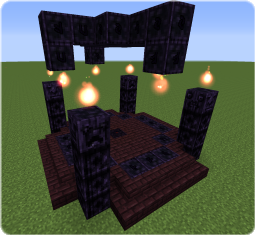
5Once you have your Runic Matrix properly placed into a structure commonly known as an Infusion Altar, you can begin to craft.
The central pedestal located under the matrix is where the item you wish to infuse will go. You will also need several more pedestals placed around the altar where you can place the blocks and items you wish to infuse into the target object. Lastly you will need warded jars or similar essentia containers holding the requisite amount of vis.
Once all this is gathered you can click on the Runic Matrix with a wand to start the crafting process.
During the first stage of crafting essentia will be drained
25
25
25
25
25
25from nearby sources. Crafting will stall of there is insufficient essentia available - something that you do not want as will be explained on following pages.
Once all the required essentia has been infused into the target object, the other objects will have their essential essence drained. Only when this is done will the crafting process complete.
Infusion crafting is not without risks. The entire process involves forcing vast energies into a single object. Unpredictable things tend to happen.
Usually one of the fusion objects get
knocked off a pedestal, or flux gets generated, but more catastrophic events are not unheard of.
The longer crafting continues due to unresolved problems like lack of vis or dropped items, the greater the chance of something bad happening.
These effects can be reduced by various means. Firstly you wish to keep the entire fusion structure as symmetrical as possible - take careful note of where you place pedestals and make sure they are balanced with other pedestals on the opposite side of the altar. When placing fusion items into them you may wish to keep them balanced as well. Lastly you can place occult paraphernalia around the
altar in symmetrical formations (things like candles, skulls, crystals, etc.). These will have the effect of reducing instability.
3
3
3
3This pair of enchanted boots have been stuffed full of magic to ease the journey of any traveler.
They allow you to move faster than normal. They also allow you to jump higher and fall further.
Lastly they allow you to cut through water like a fish. A slow and clumsy fish, but a fish nonetheless.
25
25
3
3
6This is a specialized version of the Girdle of Shielding.
It has slightly less charge than the girdle it is based on, but when your shielding is breached a detonation of kinetic energy will be released damaging and shoving back anything nearby.
This effect cannot trigger more than once every 20 seconds.
33
55
64
3
3
4
4This is a specialized version of the Amulet of Shielding.
It has slightly less charge than the amulet it is based on, but when your shielding is breached this upgrade will instantly add 8 charge to your shielding amount.
This effect cannot trigger more than once a minute.
20
35
32
32
3
3
3Combining earth shards with a thaumium shovel you have created a peerless digging implement.
When used to dig earth, sand and similar materials it will dig a 3x3 area.
If you right click on the side of a block, it will attempt to place a 3x3 section of the same material in the world as long as you have sufficient blocks in your inventory.
The orientation of both the digging and construction depends on the face you dug or clicked.
If shift is pressed you can see where blocks will be placed
16
8in the world and you can change the orientation of how blocks are placed by pressing 'G' on the keyboard. Blocks can be placed either parallel to the block face selected, or extending out of the face vertically or horizontally.
If shift is held while using this tool all its special properties are suspended and it functions like a normal shovel.
5
3
3Usually a thaumaturge needs to choose between protection and utility when out and about. Not anymore!
This modifies a Thaumium Fortress Helm to give you all the functionality of Goggles of Revealing. It does however not give the vis discount the goggles usually do.
A helm can have this upgrade along with faceplates.
32
16
16
3
3
3By merging the magical energy from order and entropy shards with a thaumium hoe, you have created a farming implement with few equals.
When used to till fields, it will till a 3x3 area instead of just a single block.
When used to crops or other plants it will act as bonemeal to promote its growth, though at a higher cost to its durability. It might even be able to grow plants that normal bonemeal can't.
If shift is held while using this tool all its special properties are suspended and it functions like a normal hoe.
8
8
8
6
6
6
3You have finally managed to unlock the secret of flight. You have created a harness that anchors itself to the Thaumic Field using thaumostatic energy allowing you to defy gravity. You think quantum's and quarks might also be involved somehow.
Unusually the only vis required to power this harness is added during its creation process. Instead the fuel it requires for flight is raw Potentia. Simply right click while holding the harness to insert filled jars.
Pressing 'H' while wearing the harness activates or deactivates it.
32
32
32
16While active the harness will constantly use Potentia.
It can be enchanted with the Haste enchant to increase the speed at which you move while flying.
The harness will not reduce your block breaking speed while you are flying with it.
6
3
3
6This girdle is designed to be used with the Thaumostatic Harness. On its own it has very little lifting power - it has just enough to prevent most fall damage.
When worn with the harness however it greatly increases the speed at which you are able to fly. The only drawback is that the harness will consume slightly more fuel than normal.
16
32
32
16
5
5
3This mask is designed to be added to an existing Thaumium Fortress helm.
When worn, this mask has an interesting damping effect on those suffering from Warp event. While it does not reduce the number of events, it does reduce their severity somewhat.
It seems laughing in the face of danger does have its rewards.
64
64
16
6
3
3
3You have discovered a device capable of extending the range and power of an Excavation focus. Of even greater use is the fact that the machine can do so without your constant supervision. You merely need to place it on a specially constructed base, point it in the right direction with a wand and apply a redstone signal.
The arcane bore requires two things to function. The first is an excavation focus placed in its leftmost inventory slot. Any enchantments applied to the focus will also alter the functions of the bore.
16
32
32
16
16Secondly you need to place any kind of pickaxe into the rightmost slot. The material of the pickaxe will have little effect on the operation of the bore, but the greater its durability, the longer it will last. Like the wand, any enchantments or special abilities of the pickaxe will also be applied to whatever the bore mines.
An arcane bore can only be placed above or below an arcane bore base. Any items mined will be ejected from the base in the direction its nozzle is pointing.
It will eject into an inventory if possible. This direction can be changed with a wand.
10
10The bore can be powered with Perditio essentia or vis which will greatly speed up the rate at which it mines. Vis or essentia can be provided by pipes and/or relays as normal.
One point of Perditio essentia will speed the bore for the next 20 blocks mined. Alternatively 5 CV is required per block mined and the bore can accept up to 100 CV per tick.
6
3
3
3You are now able to enchant a pair of magical mirrors that act as doorways to the void between the worlds. Anything shoved (or piped) through one mirror will pass through this realm and emerge from the other mirror - even across dimensional boundaries.
Unfortunately this realm is extremely hostile to mortal creatures like yourself so using these mirrors to transport living creatures is not yet possible.
To link a pair of these magical mirrors you simply need to place one of them in a desired location. You then right-click with a second
mirror on the one you placed, and the pair will become linked. You may then place the second wherever you wish and items thrown into one will be ejected out the other.
Mirrors can only be linked in pairs, so while both are placed in the world and able to transmit items you cannot link them to another mirror. When you pick up a mirror it will remember the last partner it was linked with, allowing you to easily move it without having to relink it. While one of the paired mirrors is picked up, you may easily relink either of them.
8
8
8Transporting items through mirrors places stress on the magical glass and to prevent it from shattering the mirror automatically slows down the rate at which items is spit out the other side. The greater the instability, the more the transfer rate is slowed.
This instability slowly lessens over time, but it can also be negated by relaying Ordo vis directly to the mirror.
3
3
1Sometimes a thaumaturge doesn't need to create something that shakes the very foundations of reality - sometimes he just wants something pleasing to the eye.
You have developed a simple enchantment that allows you to apply thaumaturgical symbols to banners. You do so by simply clicking with a phial of essentia on a banner you crafted and the symbol will be emblazoned on it. Shift-clicking on the banner will remove the symbol.
5
5
5
5
3This mask is designed to be added to an existing Thaumium Fortress helm.
When you are struck in combat while wearing this grim mask the creature striking you has a chance to suffer a Withering effect.
Serves them right.
64
64
16
3
5
5Thaumium armor has many things to recommend it, but its basic construction leaves it inferior to diamond armor. By improving the construction process and complexity you have found a way to create armor of exceptional craftsmanship, durability and strength.
Each individual piece of Thaumium Fortress armor has the same protective properties as diamond armor, but has greater durability and offers additional protection against magic and fire.
The biggest benefit however is that the individual armor pieces is designed and constructed to be worn together: Each additional
piece of this armor worn increases the overall protection offered by all other pieces and improves its visual appeal.
As with most objects constructed from thaumium, the armor is easy to enchant.
24
16
16
24
24
16
24
20
16
3
3
3
3- Throw one rotten zombie brain into a jar.
- Add some spider eyes and water.
- Stir gently with your wand while thinking dark thoughts.
If you follow the recipe exactly you should now have a partially animated and fully malicious zombie brain.
It retains some of the hunger it possessed as a zombie and while it cannot consume brains, it still enjoys eating the thoughts and experiences of those slain nearby. Giving its jar a good shake will make it surrender some of its ill-gotten gains for your own use.
Particle effects will be displayed above the jar when it is full.
10
10
20
6
3
3
3This magical hand mirror functions much the same way as other magical mirrors. You simply push items through the glass and they will pop out at the linked mirror.
Simple right-click while holding the linked hand mirror and you will be able to place any items in your inventory into the looking glass to have them transported.
The hand mirror can be linked to a mirror that is already paired with another.
It should be noted that the hand mirror can only send items, not receive them.
16
16
5
5
3This mask is designed to be added to an existing Thaumium Fortress helm.
When you strike a creature in combat while wearing this mask, you sometimes steal a small portion of their life force to strengthen your own.
The fact that you do this by supping on their blood doesn't seem to bother you nearly as much as it should. You wonder if you should be worried about that.
64
64
16
6
3
3
3Magical mirrors are very useful for transporting items over long distances, but what if that same principle can be applied to essentia? You think you have discovered a way to do just that.
Essentia mirrors, like their name implies, can transport essentia in the same way that magic mirrors transport items. There are a few important limitations however.
You cannot pipe essentia directly into the mirrors - they are only able to transport essentia that has been drawn from a source towards something like an Infusion Matrix.
8
8
8In effect the mirrors allow these things to draw essentia from sources via the mirror.
6
3
3
3
3For ages now wizards and thaumaturges have been enchanting weapons, tools and armor by imbuing objects with their own life energy. While effective the process is tedious and the results are completely unpredictable. Your discovery of infusion crafting might have uncovered a solution to both those problems.
You have discovered a way to enchant objects with an infusion altar. Simply place the item you wish to enchant on the central pedestal and supply the proper ingredients and essentia.
It also requires some life essence in the form of experience, but much less than would be normally required to enchant something. This experience is drawn from anyone near the infusion altar so care should be taken.
The essentia and experience costs listed in following recipes are for the first level of enchantment. To enchant an item to higher levels, simply perform the infusion process again - it can be repeated till the required enchantment has reached its maximum possible level. Essentia and experience cost are multiplied by the level of enchantment you are performing, so a level II enchant costs twice as much as a level I.
Additional costs might is also required if the item already contains enchants other than the one you are currently performing. This cost is usually around 10% per level of enchantment. So enchanting a sword with Fire Aspect I that already contains Smite III will cost 30% more.
Instability also increases as the total number of enchantments on the object increases.
Enchanting items with an infusion altar follows the normal rules for enchantment as it applies to what enchants can combine with others.
8
10
10
4
8
8
4
8
4
4
4
4
4
4
4
4
4
4
4
4
4
8
8
4
8
8
4
8
8
4
8
4
4
4
4
4
4
4
3
3
4
4
8
4
4
8
4
4
4
16
16
16
16
16
4
4
8
4
4
8
4
8
4
3
3
4
4
8
8
16
16
16
6
3When this upgrade is attached to a golem it will increase its movement and ranged attack speed.
Specific golem cores might benefit from this upgrade in other ways, so you might wish to check if additional pages were added to their Thaumonomicon entry.
10
6
3This upgrade will increase the amount of items your golem can carry at a time. Each upgrade increases the limit by between 4 and 16 (dependent on the golems base carry limit).
It also increase its physical damage and how quickly it harvests materials or performs tasks dependent on brute strength.
Specific golem cores might benefit from this upgrade in other ways, so you might wish to check if additional pages were added to their Thaumonomicon entry.
10
6
3This upgrade increases the interface inventory of a golem, allowing more items to be filtered or sorted. The number of slots added depends on the base number of slots they usually possess.
The golem's melee attacks also sets its target on fire.
Specific golem cores might benefit from this upgrade in other ways, so you might wish to check if additional pages were added to their Thaumonomicon entry.
10
3
3
3
3Like the Empty core, golems fitted with this core will remove items from an attached inventory, but instead of placing it in an inventory or dropping it in world, they will attempt to use it on a target block or location.
They will attempt to use the item as if they are a player right-clicking or left-clicking on the target block or location with the item - you can specify which.
If you wish, you can specify what items should be removed from the inventory by accessing the golems interface. All other items will be ignored.
If the golem is not attached to an inventory, it will attempt to perform its actions with an empty hand instead - simply clicking on the target as instructed.
You are able to tell the golem how to 'click' on something - apart from just telling it to left or right click you can also instruct it to be sneaking while doing so.
You can also instruct it to only click on empty air instead of a block.
20
20
20 Air Upgrade Unlocked
This upgrade will increase the speed at which the golem is able to click the target block or space.
3
3The hungry chest is able to pick up items by itself if they are dropped close enough to touch it.
5
3
3Golems are notoriously bad at following verbal commands, but this bell allows you to avoid all that.
Simply right click on a golem to select it. Once that is done a glowing, gear like circle will appear indicating the golems 'home' location and the side it is attached to.
You are now able to right click anywhere in the world to link the golem to blocks, locations or inventories it may interact with. Clicking on the same location will either unmark it, or cycle through different colors if the golem is able to interact with different colored markers.
Shift + right-clicking on a marked location will always clear it and pressing F will clear all marked locations.
Left-clicking on a golem picks it up with all its current upgrades and settings intact. Shift + left-clicking picks up the golem, but removes its core and any attached upgrades which drops separately. There is a good chance that upgrades will be lost if you do this however.
5
3
3
6
3You have discovered a way of improving golems in several minor, but significant ways.
Firstly, golems that go through this process are able to hold one additional upgrade, though they can never have more than two upgrades of a single type.
Secondly, they move slightly faster.
Thirdly, they have a slightly greater sight radius.
You are sure the malevolent intent in their eyes is just your imagination.
8
8
8
3
3
3Golems fitted with this core will remove items from an attached inventory and take them to the marked location. If the marked location is a container, they will place it inside.
If you wish, you can specify what items should be removed from the inventory by accessing the golems interface. All other items will be ignored.
5
5
6
3This upgrade increases the visual range of most golems allowing them to travel further afield to perform their tasks.
It also increases the range and accuracy of ranged attacks.
Specific golem cores might benefit from this upgrade in other ways, so you might wish to check if additional pages were added to their Thaumonomicon entry.
10
3
3
3
3This core works much like an Empty core with one key difference: It only takes an item from its home inventory if it already exists in one of its marked inventories. This makes it exceedingly useful to sort unordered items in a container into their proper places.
You cannot specify specific items to include or exclude like you can with the normal Empty core.
16
16
16
16
3
3
3
3You have discovered the secret of creating golem workers. While the Iron Golem is impressive in its own way, it is very limited and uncontrollable. You have managed to solve both those problems.
Your golem workers have just enough will and self-awareness to make them useful tools, but not enough to render them uncontrollable.
You have also discovered how to make the Golemancer's Bell and Golem Animation Cores (see their respective research entries for more detail).
The golem you craft can be placed in the world, but will remain inactive until given an animation core.
The placement of the golem needs to be considered carefully - if you wish it to interact with inventories, you will need to place it by clicking (or shift-clicking) on the inventory on the side you wish it to interact with.
Most golems can operate in a range of 16 blocks around their home location.
4
4
4The first golem you can create is made from bundles of hay and straw. It is physically weak and easy to destroy, but very light and nimble.
Straw Golem Attributes
Durability: Very Low
Strength: Very Low
Self-repair: Average
Carry Limit: 1
Speed: Fast
Upgrades: 1
6
3This upgrade allows golems to specify different colors for blocks marked with the Golemancer's Bell. This allows for greater control over what they do and where they do it.
This upgrade also unlocks certain features of some golem cores giving them a greater scope of operation.
Specific golem cores might benefit from this upgrade in other ways, so you might wish to check if additional pages were added to their Thaumonomicon entry.
10
3
3
3
3This core is a specialized version of a decanting core, specifically designed to transport essentia.
Alchemy golems assigned to an alchemy furnace or alembic it will draw essentia from the entire stack of alembics and transport it to marked warded jars. It is not required to mark every single jar - the golem will automatically fill all jars adjacent to the marked jar and all other similarly connected jars.
Alchemy golems prioritize nearby jars first and will try to fill an entire jar before starting on a new one.
15
15
15They will also favor labeled jars over unlabeled ones. If there are full void jars they will try and fill normal jars first, unless the void jar is labeled. In the case of ties void jars are always filled last.
Alchemy golems can also transport essentia between most other essentia storage containers and blocks that accept essentia.
3
3
3Golems fitted with this core will examine inventories you have marked for certain items, and place them in their home inventory.
There are two modes of operation:
In Precise Amount mode the golem will fill its home inventory with the specified items until it contains an amount equal to the amount you specified in its interface.
In Any Amount mode the golem will keep filling the current inventory with the specified items as long as there is room and available items.
5
5Golem Animations cores are used to give your golems purpose - without a core they remain inanimate.
The first such core you are able to create is the Gather core.
Golems fitted with this core will seek dropped items within 16 blocks, pick them up and then place them inside an attached inventory. If they are not attached to an inventory they will simply hold on to them.
If you right click on the golem you will be able to set specific items they should pick up - all others will be ignored.
5
5Simply right-click on a freshly placed golem with a core to attach it to the golem.
5
5
6
3Golems fitted with this upgrade automatically inflicts damage on anything damaging them.
Golems with this upgrade will also have more control over what items they are looking for. You will be able to make them use or ignore damage values, NBT data or even check the ore dictionary to find similar items.
Specific golem cores might benefit from this upgrade in other ways, so you might wish to check if additional pages were added to their Thaumonomicon entry.
10
3
3
3Golems fitted with this core will attempt to keep the liquid inventory they are attached to filled with an appropriate liquid.
If you wish, you can specify what liquid it places in the tank by accessing the golems interface and placing a liquid container (like a filled bucket) in a slot. All other liquids will be ignored.
A decanting golem can only carry 100mb of liquid per item its material type is normally allowed to carry, though they will always carry a full buckets worth if instructed to pick up liquids blocks in the world.
5
5 Entropy Upgrade Unlocked
If you fit this upgrade the golem will first try and pick up the furthest possible fluid block attached to any you have marked. This will allow it to empty pools of liquid and not just the one block you marked.
It will only search as far as its sight range allows, and the distance is measured in actual blocks searched to get to the target block and not a straight line.
3
3
3
3An extension of your golemancy research has led to a useful companion for any thaumaturge on the go: The Traveling Trunk.
This wooden chest will happily hop after its master, always ready to provide a convenient storage space for anything you pick up.
The traveling trunk is tough and can take a significant amount of beating. It is highly resistant to fire and cannot be harmed by falling.
The trunk can follow its master everywhere - even distant dimensions. Should you wish it to stay put however, there is a convenient button located in its interface
4
4
4
16which will make it remain in its current position.
The traveling trunk slowly heals itself over time, but you can also feed it all manner of food to speed up this process.
Like normal golems, the trunk can be picked up by left-clicking with a golemancer's bell. It will drop all items in its inventory of you do so. Shift-clicking will also cause it to drop any upgrades you have applied to it with the normal loss chance.
It can accept a single upgrade like normal golems, but they grant unique abilities to the trunk. See the following pages for details as you discover the relevant upgrades.
Golem Upgrade: Air
With this upgrade installed the traveling trunk will move faster.
Golem Upgrade: Earth
With this upgrade installed the traveling trunk be able to carry more items and will gain an additional row in its inventory.
Golem Upgrade: Fire
With this upgrade installed the traveling trunk will defend its master when he is attacked.
Golem Upgrade: Water
With this upgrade installed the traveling trunk cannot be opened or picked up by anyone else but its master.
It also become highly resistant to all but the most devastating amounts of damage.
Golem Upgrade: Order
With this upgrade installed the traveling trunk will retain its items when it is picked up using a golemancer's bell. It will drop items as normal when shift-clicked is used.
Golem Upgrade: Entropy
With this upgrade installed the traveling trunk will automatically suck in any nearby items it has room for.
4
4
3
3This golem is carved from a greatwood log. It is a moderate improvement over the straw golem.
Wood Golem Attributes
Durability: Below Average
Strength: Low
Self-repair: Average
Carry Limit: 4
Speed: Above Average
Upgrades: 1
4
4
4
7
7
6
3While macabre, golems made from zombie flesh has several features to recommend them. Not only does it repair itself very quickly, it is able to hold 2 upgrades.
Flesh Golem Attributes
Durability: Low
Strength: Low
Self-repair: Very Fast
Carry Limit: 4
Speed: Above Average
Upgrades: 2
8
8
8
3
3
3Golems fitted with this core act as guards, attacking any hostile creatures within range.
You are sure with a little bit of tinkering you could make the golem a bit more selective with the targets it attacks, but for now it only seeks out aggressive mobs other than creepers.
5
5 Order Upgrade Unlocked
If you fit this upgrade you can specify the types of creatures the golem will attack. The golem will also be able to attack more than just hostile entities.
6
3
3Golems fitted with this core need not be attached to an inventory. They seek out fully grown crops, reeds and other commonly farmed plants within a small radius and harvest them. The harvested material simply drops to the ground and must be gathered by some other means.
Unfortunately they are not smart enough to replant the crops they have harvested, but you are sure with a bit of work you might be able to eventually fix that bug.
5
5 Order Upgrade Unlocked
Harvest golems fitted with this upgrade will now attempt to replant the crop they just harvested. This could fail if the plant failed to drop the proper seed or seedling.
6
6
3
3Fired clay is proven to be a superior crafting material for golems. It is fireproof and has more than adequate mobility.
Clay Golem Attributes
Durability: Average
Strength: Average
Self-repair: Slow
Carry Limit: 8
Speed: Average
Upgrades: 1
4
4
4
3
3
3
3
3This advanced golem is only marginally better than the clay golem, but is capable of holding two upgrades.
Tallow Golem Attributes
Durability: Average
Strength: Average
Self-repair: Average
Carry Limit: 8
Speed: Average
Upgrades: 2
8
8
8
3
3
3
3This core is a refinement of the standard Guard core.
A golem fitted with this core will only attack animals, but it is intelligent enough to only attack the oldest, fully grown adults and always make sure that a breeding pair remains.
5
5
3
3
3
3This core allows a golem to fish for your supper.
For best results the golem needs to be placed near deep and open water.
Golem strength determines fishing speed.
16
16
16 Air Upgrade Unlocked
A fishing golem fitted with this upgrade has a small chance of catching more than one thing at a time.
Fire Upgrade Unlocked
A fishing golem fitted with this upgrade will automatically cook any fish it catches.
Order Upgrade Unlocked
Order upgrades will increase the chance of getting good fishing results.
Entropy Upgrade Unlocked
Entropy upgrades will reduce the chance of getting bad fishing results.
6
3
3
3Like Harvester golems, Lumberjack golems can be placed anywhere. They will seek out nearby trees and chop them down. Stronger golems will chop them down faster.
Lumberjack golems do not replant the trees they have chopped down.
16
16
16
6
6
3
3Stone golems are very durable and able to carry heavy loads, but they are much slower than most other golems. Its weight allows it to sink in water.
Stone Golem Attributes
Durability: Above Average
Strength: Above Average
Self-repair: Slow
Carry Limit: 16
Speed: Slow
Upgrades: 1
4
4
4
3
3This simple device allows a golemancer to bring their golems to a temporary halt.
If this block is activated with a redstone signal any golem that passes over it will come to complete standstill and cease its current task.
Once this block is deactivated the golem will once again go about its business.
5
5
9
9
3
3Iron golems are extremely tough and strong, able to carry huge loads. Their weight however causes them to move quite slowly and sink in water.
Iron Golem Attributes
Durability: High
Strength: High
Self-repair: Very Slow
Carry Limit: 32
Speed: Very Slow
Upgrades: 1
4
4
4
10
10
3
3
3Thaumium golems have slightly better attributes than iron golems and are able to have 2 upgrades. They are also highly resistant to magical damage. Its weight allows it to sink in water.
Thaumium Golem Attributes
Durability: Very High
Strength: High
Self-repair: Slow
Carry Limit: 32
Speed: Slow
Upgrades: 2
8
8
8
2
1
1This tiny hat is the perfect accessory for any golem. Not only is it stylish and dashing, but any golem wearing it will have increased health and vitality.
8
8
2
1
1Golems are notoriously short sighted, and these glasses alleviate that weakness to some degree.
4
4
2
1
1A must for any golem on the go, this bowtie will fill it with additional energy, increasing its pace.
4
4
2
1
1This strange headgear seems to fill any golem wearing it with unusual vitality, allowing it to repair damage at a much faster pace.
4
4
1
2
1This dart launcher can only be attached to combat golems. It is not quite as powerful as the golem's primary attack, but gives golems limited to melee combat a means of attacking foes at range.
4
4
1
2
1This metal visor will grant a combat golem a small amount of additional armor protection. It will also insure that any foes attacked by the golem will drop experience orbs when they die.
4
4
1
2
1The armored plating grants the golem wearing it increased resistance to physical harm. Unfortunately the additional protection comes at a cost, as all the heavy ironmongery will slow it down.
8
1
2
1This weapon increases the damage a golem will do with melee attacks.
4
4
5
3
3
3
5A truly enlightened thaumaturge realizes that he need not choose between utility and defense.
By augmenting existing void armor with the proper enchantments and combining them with thaumaturge's robes he will be able to create a set of armored robes that not only offers physical protection and mental focus, but mystical protection as well.
The robes will also retain all the properties of void armor while the hood will offer all the benefits of the goggles used in its crafting.
This armor can be dyed.
16
16
16
16
16
16
16
24
24
24
16
16
24
20
20
20
16
16
20
5
8
3
5Most types of essentia are fairly volatile and care must be taken in its storage - that is why most thaumaturges use warded jars. You, however, are not most thaumaturges.
Using the wonderful new substance called void metal, you have discovered a way to greatly improve the storage of essentia. Essentia reservoirs are capable of storing up to 256 essentia in any combination.
Potentially disastrous mixing of the different essentia types is prevented by having dynamically reshaping compartments crafted from the new metal.
8
8
8
8Like jars, the reservoirs can only be accessed from one side, though you can choose how they are orientated. Unfortunately they cannot be emptied or filled by hand so you need to rely on tubes or golems for that.
Picking up a reservoir while filled is, um, inadvisable.
You were so pleased with this discovery that you showed it off to some of your fellow thaumaturges. Strangely, most of them dived for cover even after you assured them the constant sound of metal under incredible stress is perfectly normal.
3
3
3
5By infusing magic into metal you had managed to create Thaumium. It was a worthy discovery, but the time has come to leave thaumium to amateurs and dabblers.
A strange and half-remembered dream has given you the urge to try something... different. What if you infuse metal with more than just magic, but with the very essence where magic is drawn from: Darkness and the Void that dwells between the stars.
The resulting metal is disturbingly slick and warm to the touch. It is almost as soft as gold making it easy to work, but
8when struck it becomes as hard as thaumium and sometimes even harder. More impressively all but the most devastating damage soon repairs itself as the metal slowly flows back into place.
The only downside is that it isn't as easy to enchant as thaumium, but still compares favorably to mundane materials like iron.
You have discovered that care must be taken when handling the metal - being harmed by it seems to temporarily sap your strength.
5
5
3
3
3Crafting wand caps from Void metal seems counterintuitive since it seems to be highly resistant to magic, but counterintuitive is where you live now.
Your gamble paid off. The metal itself may be resistant to magic, but it channels with surprising ease. The magic does seem strange somehow, but it is probably just your imagination.
27
27
18
18
18
18
18
18A veil has been lifted - a door opened in my mind.
When I look through I see wonders. No, not wonders. What I see is
What I see is I see i see I sEee i

Who wrote this?
It has suddenly become clear to you. Where others see chaos, you occasionally catch a glimpse of a pattern... a very strange and disturbing pattern. Something stirs in the darkest corners of the universe.
You have tried to explain it to others, but received only strange looks in return. No matter, you will show them someday.
You will show them all.
8
8
2
6
6
6
6
6
6
6What madness possessed you to create this thing? This focus seems wildly dangerous and only a lunatic will attempt to use it anywhere but the most controlled environments.
Granted, the orb of raw primal energy it creates is quite devastating, but its path of travel is erratic at best and downright malicious at worst.
It does beg further study however: The orb shows some interesting dimensional properties and it exhibits energy patterns you have only seen in wisps and aura nodes.
25
25
25
25
25
25
3
3
3
6
6It was all so simple - you are amazed the Crimson Cultists have never discovered this.
To perform the ritual you simply need to place four Eldritch Eyes on the specially marked keystone found at one of the strange altars where you first discovered the cult. The sinister node above the keystone must remain intact.
Once this is done it is a simple matter of infusing a large amount of primal vis into the keystone with a wand - 100 units of each should be sufficient.
64
16
16
16If you have done everything right the ritual should be complete and the so called "Eye" would be opened.
Of course you have no idea what that means. No matter, only fools fear the unknown!
5
3
5Things have become busy in your mind lately. It is probably best that you have a look inside there and make sure everything is still all right.
This tool will allow you to check the effects of warp on your psyche and how much it is effecting you.
Of course you cannot allow a tool like this to fall into the hands of your enemies so you have taken great pains to obfuscate the information it provides. You might have gone too far though - you are having a hard time deciphering it yourself.
24
24
8
9
9
9
9
9
9
9
12This core pulses with latent energy.
It combines all the features off the lesser stave cores - it has the vis storage capacity of the silverwood core and is able to replenish its vis stores like the various primal wand cores.
Lastly it adds one level of potency to any foci used with it.
This is truly a potent tool in any thaumaturge's arsenal.
Note: You still need to add caps to this stave rod, just like you would for a wand.
32
32
32
32
32
32
64
4
4Your suspicions have been confirmed. This is not the home of the race you have come to call the Eldritch. This place is something else entirely and you do not believe it exists in what you understand as being "reality" - it is as much a mental construct as a physical one, but what mind can contain this?
You have been able to decipher only a small number of the symbols, but you are sure this place is a trap - a place to test visitors and weed out the weak. For what purpose you are not sure.
You are not quite sure what you were expecting when you stepped through the Oculus, but this strange structure of crumbling stone and twisted passageways was not it.
Something is not quite right here - this structure was not designed for any practical purpose you can discern... unless that purpose was for it to be a deadly maze.
Strange energies abound and your magic seems to act strangely in this alien environment. Even the other denizens you encounter seem out of place here.
8
8
8
8
8
8For the first time you find yourself with a puzzle that you do not think can be solved.
This object contains pure primal aspects, but they possess properties unlike what you consider normal, everyday primal aspects. You have a few theories why this could be:
Firstly this "pearl" could be the remnants of primal matter that was created at the dawn of reality - elementary magic that existed before it mingled and merged into compound aspects.
Alternatively it could be primal matter from a place that does not conform to the known rules of
magic as you have come to understand it. You are not sure which explanation is more worrying.
Either way, the pearl is a potent artifact containing vast magical power and nearly unlimited potential.
It is time you start putting it to use.
6
6
6
6
6
6
6The theory behind infusion crafting is simple - infuse a single object with essentia and the properties of other objects. There are limits however, but it seems with the discovery of the primordial pearl these limits are becoming less and less.
As an experiment you tried infusing the properties of completely different objects into the pearl with suprising success. The Primal Crusher is the first practical application of this discovery.
By combining a Shovel of the Earthmover and a Pickaxe of the Core with their void metal counterparts you created a
24
24
16
16
16
16
16tool of unrivaled destructive capabilities that has most of the features of its component pieces.
The Primal Crusher can mine through earth and stone with equal ease and does so in a 3x3 area. Like the Pickaxe of the Core it occasionally mines native clusters instead of raw ore.
It repairs itself over time, has high enchantability and serves as a relatively good weapon in a pinch.
Unfortunately it seems purely destructive in nature and has lost the construction and detection abilities of its parent tools.
1
1
1
1The standard alchemical furnace is fairly slow and requires fuel to operate. While neither of those are particularly difficult obstacles to you, the fact that it is unable to process large sources of essentia is something that can not be ignored. Unfortunately the instability of the essentia slurry it creates makes it dangerous to gather too much of it in one location.
With the discovery of Primordial Pearls you have found a solution to that problem - The Advanced Alchemical Furnace.
Using alchemical constructs that have been strengthened with void
10
30
10metal and exposed to a primordial pearl's strange energies much more slurry can be processed at once and at much greater speeds. The pearl is not consumed during the crafting process.
Instead of fuel, heat is generated by ignis vis and instead of relying on heat alone perditio vis breaks down objects almost instantly. Lastly aqua vis keeps everything running smoothly and prevents the slurry from settling and causing problems.
The machine requires a considerable amount of heat to function and requires a constant supply of ignis vis even when not operating. Perditio and aqua vis is only used when the machine is smelting.
50
50
50
1
1
1
1You have developed a bit of a wild theory that might be worth exploring. Why not bring a primordial pearl into contact with an aura node?
Sure, bringing two such sources of raw magical energy into contact with each other might be catastrophic, but their interaction could also be highly... interesting.
While anyone can do this, you are sure that completing this research has slightly improved your chances of getting a good result. Very slightly.
3
3
3Zombie pigmen are a rather dim lot. All it takes to lure them through the rift is the promise of shiny things and juicy brains.
Careful, though: Dense as they are, one might still realize it was tricked and become very, very angry.
Nethermind - Cost per conjuration: 2 Corpus, 2 Ignis.
Lure - Cost per 15 conjurations: 15 Fames, 9 Cognitio, 3 Lucrum.
Instability: Minor.
20
15
15
3
3
3There are two problems when it comes to ghasts: First, they are apathetic, making it difficult to lure them through the rift. Second, the rift needs to be quite large. What it comes down to is that the essentia used is fairly specialized and the process is much less stable than normal.
Moreover, again due to their size, they impose a special requirement on the Dimensional Lure's structure. The distance between the Nethermind and the Lure must be at least eight blocks (rather than the normal six).
20
15
15Nethermind - Cost per conjuration: 1 Exanimis, 2 Spiritus.
Lure - Cost per 6 conjurations: 6 Fames, 1 Permutatio, 4 Spiritus, 4 Aqua.
Instability: High.
3
3
3As wither skeletons can be found primarily in the Nether's mysterious fortresses, it seemed best to key this rune on finding not only skeletons themselves but also their fortresses.
Unfortunately, the tie between these skeletons and their fortresses also causes some interference, making the process less stable.
Nethermind - Cost per conjuration: 1 Mortuus, 1 Corpus.
Lure - Cost per 20 conjurations: 20 Fames, 5 Telum, 5 Sensus.
Instability: Moderate.
15
20
3
3
3Although you have found wisps of many types in the Nether, most of them have been unable to survive the trip through the rifts the Dimensional Lure creates. Their magical energies interact in some way that makes both simply dissipate. However, you have discovered a relative of the common wisp that has taken on more of an infernal nature.
With your devices' ties to their home realm and the fact that these hellfire wisps are more resilient than their cousins, you should be able to conjure them - but you'll need a very stable setup to do it efficiently.
40
20
10Nethermind - Cost per conjuration: 1 Auram, 2 Ignis, 1 Aer.
Lure - Cost per 8 conjurations: 8 Fames, 3 Auram.
Instability: Dangerous.
2
2
2
2The brain in a jar has a rather limited capacity for stored experience. (This shouldn't be a surprise, given where you found the key ingredient.) While the Amnesiac's Stone helps to extract those memories, it cannot make room for the new without losing the old. To work around this issue, you have created a new type of stone.
When a block of Soul Stone is placed next to an Amnesiac's Stone which is beneath a brain in a jar, then experience will be drained from the brain, seeping into the soul stone.
Should the stone contain more experience than the brain above, the
60
30
10Amnesiac's Stone will begin working in the other direction, pulling from the soul stone until the brain can hold no more.
This simple setup is all you need to increase the effective capacity of your jarred brains, but the soul stones, too, will eventually be filled and, on their own, they don't solve the portability issue. Breaking one destroys a portion of the stored experience and drops the rest. Fortunately, more can be done.
Soul stones are, in a sense, porous. Memories slowly permeate the stone which acts as a filter of sorts, concentrating them as they flow.
Eventually, the essence is condensed enough to be held in a more
convenient container. If an empty, unlabeled warded jar is placed below the stone (within a block or two - further down and the fluid loses its potency), then "enchanter's concentrate" will drip into it. This jar can then be safely moved or you may use it to fill phials from which you may drink.
But be aware, unless a solid block prevents this, liquid will slowly drip from the soul stone even without a jar to catch it. Needless to say, this is quite wasteful.
Note that an item grate directly below allows the concentrate to pass through when it is open. That or a piston (for example) could help regulate when the enchanter's concentrate should fall from the stone.
A comparator can be used to see how full a soul stone is. A comparator reading from an Amnesiac's Stone with attached soul stones will evaluate the entire structure's capacity, not just the brain in a jar's. (If you want only the brain's, you can point the comparator directly at it.)
Glass bottles can also be filled from the jar but they are unable to preserve the stability and density of the liquid, which means they not only hold much less but they are also unsafe to drink from directly. Further, a phial can be used to refill a jar but a bottle cannot as the liquid is no longer quite the same.
5
5Your research on suppressing the minds of golems has led you to another interesting use for an Entropy-imbued crystalline brain: Driving memories - experience, shall we say - from the human mind. This may be useful in conjunction with a nearby Brain in a Jar.
Contact with this stone will quickly drain experience points. A right-click drains one level. Sneaking while clicking drains five. Standing on top of the stone rapidly drains all levels.
The stone also has a useful effect on brains in jars. If a jar is placed above it, then a shift-right-click on the jar with an empty hand causes
20
4
4all the stored experience to be dropped at once.
If a comparator is positioned to read from the stone, it will output a signal which increases in strength as the brain above it fills up on experience.
Bottles o' enchanting thrown on top of the stone are also drained. The amount retrieved is above the average that breaking a bottle would yield, making this a good way to maximize your experience gain.
There may be other items can you drain this way as well.
3
3
3The only thing magma cubes seem to be attracted to is food and their fellow magma cubes.
Nethermind - Cost per conjuration: 1 Limus, 2 Ignis.
Lure - Cost per 8 conjurations: 16 Fames, 1 Limus.
Instability: Minor.
20
10
10
5
5
5
5
5The shared properties of the Nethermind and Siren's Lure have led you to theorize that the two could work together. With some alterations to the Lure and adaptation of the Nethermind structure, you should be able to conjure creatures rather than blocks.
The Dimensional Lure probes unknown corners of the Nether for targets, opening small rifts and luring creatures through them. To pull this off, a considerable amount of essentia must be consumed by both the Nethermind and the Lure. The Ignis centi-vis requirements of the Nethermind will increase as well.
The type of essentia needed depends
64
32
8
16
16
8on the creature being targeted, and specific creatures must be targeted rather than simply drawing things in at random. (The bait must be tailored to the creature, after all.)
The creature is determined by replacing basic runed obsidian in the Nethermind structure with specialized runed obsidian for that creature. Multiple types of creature- specifying runes can be used, but at least four (total, of any type) are required. You cannot mix creature- and block-specifying runes in the same structure.
The Dimensional Lure block must be placed between six and ten blocks below the Nethermind with no solid blocks between them. A circle of basic runed obsidian must be placed
around it, as specified on the previous page. Conjured creatures will appear between this platform and the structure above.
Once the structures are in place, first tap the Lure with your wand to activate it and then tap the Nethermind block to begin drawing creatures in.
Unfortunately, this process is not entirely stable. There is a chance that various negative effects may occur instead of or in addition to a creature being summoned. To combat this, Obsidian Totem pillars can be placed in the four corners around the circle. The taller the pillar, the more stability it
provides. (Maximum four totem blocks per pillar.) For best results, keep all four at the same height.
Topping a pillar with nitor or placing nitor below any of the four arms of the Nethermind structure improves stability as well.
Runed Obsidian (Blaze)
With an Ember Heart infused into the Nethermind, perhaps the easiest target to lure is a blaze. In fact, it appears that sometimes an additional blaze is actually created rather than lured (at no added cost), though there is a spike of instability when this happens.
Essentia is consumed by both the Nethermind and the Dimensional Lure, as indicated below.
Nethermind - Cost per conjuration: 4 Ignis, 2 Praecantatio.
Lure - Cost per 10 conjurations: 10 Fames, 5 Victus.
Instability: Minor.
25
10
You are certain that you could devise a variant of runed obsidian for many other creatures of the Nether. It should only take a little field research.
Scan your target with your handy thaumometer and then take it down in combat. That should reveal what you need to know, if there's anything to know.
3
3
3The aggressively suicidal nature of firebats makes them easy to lure. Simply present them with what appears to be a human target.
Nethermind - Cost per conjuration: 1 Bestia, 1 Ignis, 1 Perditio.
Lure - Cost per 10 conjurations: 10 Fames, 1 Humanus.
Instability: Minor.
20
15
15
5
8
4
2
2The Golemic Inhibitor takes the control offered by the golem fetter to a new level. Rather than simply halting golems on top of a single block, it will halt all golems in an area.
The inhibitor must be placed on top of a golem fetter. It is only active when the fetter is active. Additional fetters can be placed below this. The more active fetters there are chained together (up to four), the larger the affected radius.
15
5
5
5 Linking
If any golems are linked to this device, then they will be immune to the golemic inhibition effect, allowing them to proceed as normal.
Alternatively, the linked golems can be the exclusive targets of the effect.
Right-click on the inhibitor with a wand to toggle between these modes.
8
4
4
4In order to take full advantage of thaumic devices like the Golemic Inhibitor, you must link golems to them. By holding a linking bell and right-clicking on such a device, the bell is attuned and ready to make these links. Right-click with an attuned bell on a golem and it will be tied to the device.
Of course, there are limits. While the link itself can be maintained at any distance, there may still be a maximum range to the effect the thaumic device creates. Secondly, a golem can only be linked to a single device. Finally, a device cannot be reliably linked to more than six golems. (Unexpected behavior may occur when more than that are in the
16
4
4
8area, such as some of these golems behaving as if they are not linked.)
If you ever want to sever all links to a device, simply right-click on it using the bell while sneaking (hold Shift).
Sneak and right-click on any block to remove the bell's attunement.
The research notes for any devices you've already discovered that allow golem linking have been updated.
5
5
5
5Once you have established your Essentia Locus and pointed it to your vast collection of jars, it becomes time to convert your centralized essentia counting system into a distribution hub.
A locus with an Essentia Aggregator placed directly beneath it becomes an essentia source for any essentia mirrors in the vicinity (as well as certain other devices, including the Runic Matrix). Essentia drawn from the locus is pulled from valid containers (e.g. warded jars) that are being monitored by the locus.
This gives you a central location to count essentia, place mirrors, and
32
24
16
8
8
16perform infusions, but you believe there is still more you could do with the locus in the future.
10
5
5
3
3A method of counting creatures and other entities in an area would be useful for many things, and a crystalline brain fortified with Terra - with its affinity to both Life magic and the building blocks of the corporeal - makes the perfect candidate for the job.
This device will emit a redstone signal (both directly and by comparator) when entities of a certain type are found in its range. The more there are, the stronger the signal. (Redcrystal is required to receive a signal strength over 15.)
You can limit the count to include only adult animals, or only children, when applicable.
25
15
15The area examined by the device is determined by the blocks around it. Placing a block on one face will limit detection in that direction but boost detection in the opposite direction. Blocks on opposite faces (e.g. north and south) will prevent detection in both directions. However, glass and replaceable blocks like water are ignored, allowing scanning in their direction.
If, for example, all sides are open, then the device will be in the center of the area. If the only open sides are its top, north, and east, then the device will be in the bottom-south-western corner of the area. (In both examples, the area would be 11x11x11 blocks, which is the maximum possible size.)
Oculo Anima
To allow specification of an entity type, you have modified a crystalline eye such that it can be imprinted with a creature, spirit, or construct's signature traits. Simply right-click on the entity while holding the eye, then insert the attuned eye into the device.
The eye can also be made to watch for humans (players), either a specific individual or humans in general. Attuning it to another person is accomplished in the same manner as previously described. To focus the eye on yourself, hold shift-right-click for a couple of seconds while carrying it in your hand.
4
2
5
5
5While researching runes to use with the Nethermind, another property of the Ignis-imbued crystalline brain has come to light. When its energy is directed at the minds of creatures around it, it can instill certain powerful emotions.
With this knowledge, you have created a device that draws nearby creatures toward itself. The awe and passion it instills blinds them to most everything else, including their surroundings - even when those surroundings include a sudden drop from great heights.
Although runed obsidian is used in its construction, the result is something fundamentally different
16
10
10
8and cannot be used as part of a Nethermind structure. In fact, on its own, none of the obsidian you've worked with so far is up to par with what you'd need here. Fortunately, the ancients have left some of their handiwork behind.
To function, the Lure must be placed as part of a vertical line of Obsidian Totem blocks (at least two). Susceptible creatures in a fairly wide horizontal area are affected but the vertical area is only as tall as the completed totem (maximum 4 blocks above and 4 below).
The horizontal area covered can be greatly increased if a jar of Fames is provided nearby.
Tap the Lure with your wand to
activate or deactivate it.
Different creatures react to the siren's call in different ways. Many will simply blindly walk in its direction. Others, such as endermen, appear to become confused and may even struggle to get away when approaching a drop, but this is short-lived. Indeed, endermen under its spell will find themselves teleporting closer rather than away.
A few creatures are completely immune, including your golems, some powerful entities, and primitive slimes.
If multiple Lures are in range for a creature, then the one with the strongest lure will be the creature's
primary target. The taller the totem, the stronger the lure. Clever use of lures of varying strength could send creatures down complicated, bending paths.
The Lure won't hold a creature's attention indefinitely. If it is unable to get closer to the Lure for a period of time, then the effect may wear off, at which point it may take some time for it to be applied to that specific creature again (though the creature may still be drawn to other Lures in range). Lastly, creatures that are engaged in combat are often able to shrug off the call.
1
1Slivers of magic can be used in an alternative recipe for the Paving Stone of Travel.
3
3
5
10
8You have plans for a system that will unify and guide the production and distribution of essentia across all your territory. At its heart - or rather, its nerve center - is the Essentia Locus.
The potential of this system is high but its beginnings may seem relatively humble. The locus will simply examine the contents of warded jars and relay the combined total. Still, this is most convenient as a vis reader could use it to react to the essentia total of all your jars, not just one.
Once the key component of the locus is crafted, it must be placed above a water crystal cluster that is above
32
24
16
8
8a block of lapis lazuli. The lapis should be encircled by water and the water should be contained on the sides by silverwood planks.
The Essentia Locus block must be placed last.
Once the locus is established, specify warded jars using crystalline eyes. A single eye can point to multiple jars: Any jars adjacent to the first's location and all similarly connected jars will be considered. Right-click on the locus with an attuned eye to put it to use. Right-click with an empty hand to remove a crystalline eye.
Normally, a maximum of twelve jars can be examined and only one crystalline eye can be used. Placing
water crystal clusters adjacent to the silverwood planks of the construct increases this by eight jars and one eye per cluster. Each cluster also increases the maximum distance a group of jars can be from the locus.
Note that while a vis reader cannot be placed directly beneath the essentia locus block itself, one placed under any of the structure's water blocks will function and additional readers can be set up using remote comparators.
Essentia Reservoir
You have found that the Essentia Locus is capable of obtaining essentia totals from an essentia reservoir similar to how it does so from warded jars. It didn't even take any additional calibration. You must have seen this day coming. Truly your genius knows no limits!
1
3
2The shards obtained from infused stone contain only a fraction of the magic found within the ore. With some careful adjustments to the entropic processing procedure, you should be able to extract more of that potential from the stone than normal, albeit in sliver form.
3
1You've developed a process to break down the various shards of primal magic into even smaller pieces. This is helpful when using a whole shard (if shards can be described as being "whole") would be unnecessary and even wasteful for the task at hand.
Unfortunately, putting the pieces back together isn't quite as easy. It will take significantly more vis to produce a shard than break one down.
1
2
2
1
1
5
10
5
5Upon closer examination, you've found that a crystalline brain reinforced with Ignis seems to constantly draw energy into itself (and burn through it just as quickly). Tracing the source of this energy pointed you to the Nether. If you found something compatible with this brain that had a strong tie to Netherfire, you could create a "Nethermind" that would pull across something more tangible, conjuring lava and nether-blocks out of essentia.
An Ember Heart, along with a few other choice reagents, should do the trick. Your studies indicate that they are tied in some way to the hellish creatures known as blazes and may even have something to do
6
3
1
1
64
32
16
16
16with how they are created in the Nether.
Some manner of powering and controlling the Nethermind will, of course, be necessary. To this end, you have created runed obsidian. In addition to being used to encase the Nethermind itself, such runes must surround it in the indicated fashion (next page).
There are different runes for different purposes. Any basic runed obsidian block shown in the diagram can be replaced by a more specialized rune. The more runes of a given type there are, the more of an impact that type will have (to a point). With only basic runes, the device will operate fairly slowly and will generate only netherrack and the occasional patch of lava.
75
25Once the runes are arranged, tap the Nethermind block with your wand. You can tap it again to turn the device off, but it costs vis from your wand every time it is started.
To function, the Nethermind must be powered by Ignis vis supplied by a relay. It also needs warded jars nearby from which it can pull essentia. The type and quantity of essentia needed is determined by the runes at work. Basic runed obsidian requires only Ignis and Terra.
Blocks conjured from Netherstuff will appear in a 9x9x9 area two blocks below the structure.
Runed Obsidian (Rock)
Use this rune to increase the chance that netherrack will be generated. If at least four block-specifying runes like this are in place, then only the blocks they specify will be generated. The more runes tied to a given block, the more likely that block will be created. (So if four of a single type are used, then the chance is 100%.)
Another advantage of using this rune is that generating netherrack with it requires less essentia than doing so using basic runes. (Placing additional Rock runes does not further decrease the cost.)
Cost per conjuration: 1 Ignis, 2 Terra.
3
6 Runed Obsidian (Sea)
Use this rune to increase the chance that lava will be generated. As with other block-specifying runes, having at least four of them means only the specified blocks will be generated.
Cost per conjuration: 6 Ignis, 2 Terra.
30
10
9
6
3By placing this rune in the Nethermind structure, nether quartz can be generated. As with other block-specifying runes, having at least four of them means only the specified blocks will be generated.
Cost per conjuration: 3 Vitreus, 1 Terra.
30
10
20
1
1Slivers of magic can be used in an alternative recipe for the Paving Stone of Warding.
3
3
5
5
3Measuring the empty space inside a container is one thing, but determining the type and amount of vis is another story. And the protaganist of this story? That'd be the vis reader.
The vis reader outputs a redstone signal based on the vis contents of anything from warded jars to crucibles to aura nodes themselves. It could even read wands' vis if they were held on a suitable device.
There are two ways this can work. The simplest method is placing the vis reader directly beneath the object to be read. Otherwise, place a remote comparator above the reader and link its crystalline eye to the
3
3
3
3
3
3target location. The comparator will cease its normal functions, instead relaying vis information to the reader to act upon.
Right-click the vis reader with your wand to configure it.
Configuration
The signal strength output by the vis reader varies depending on its configuration and the aspects detected. Signal strength normally operates on a principle similar to an inventory-checking comparator: 15 when the container is at capacity, 0 when empty, and something in-between otherwise. You can filter by aspect type by placing jar labels inside.
Inverse Mode: A full-strength
signal is sent when empty and no signal when full, with states in-between adjusted accordingly.
Total Mode: The count of all aspects are totalled together to compare against the capacity.
Any (High) Mode: The highest count of any one aspect is used for the value that will be compared against the capacity. (But see the Nodes section.)
Any (Low) Mode: As Any (High) mode but the lowest count of any one aspect is used. (Also see the Nodes section.)
Capacity: The value that will be considered "full" for signal strength calculations. If set to Auto, the vis
reader will automatically determine the capacity based on the object it is viewing (if possible).
Aspect Count Mode: This mode differs from the others. Rather than testing how "full" of vis the target is, a signal is output based on the number of aspects present (even those with a value of zero). A strength of more than 15 can be output unless in Invert mode, but redcrystal is required to read such a signal. The Capacity setting and jar labels are ignored.
Nodes
When the read object is a node, Capacity is set to Auto, and one of the Any modes is selected, then the capacity will be the detected maximum of a single specific aspect rather than all aspects' maximums combined. The specific aspect chosen for comparison is that which is most or least filled compared to its own capacity rather than whichever aspect simply has the highest or lowest count at the moment.
(So if the mode is Any (High), then an aspect that is 50% full, at 5 out of 10 vis, will be preferred over one that is 25% full, at 10 out of 40, even though the latter has more vis.)
Infusion
You've found that not only can the vis reader measure the presence of aspects in an object but it can evaluate the lack of aspects when certain devices are attempting to carry out their tasks. At least, this seems to be the case with the matrix of an infusion altar.
This could be useful if you want to send redstone signals based on whether an infusion is taking place and how it is going.
Essentia Locus
With the aid of the Essentia Locus, a vis reader can react to the combined essentia totals of many jars at once. Either place the reader beneath the water of the structure or use a remote comparator with a crystalline eye attuned to the locus block itself.
The vis reader treats the locus similarly to how it treats an aura node. It calculates a given type of essentia's maximum value based on the capacity of the jars that either currently contain that aspect or are labeled for it.
5
1
1
1
5
1
1
1Having steadily honed your crystallization technique with redstone and spider eyes, you've decided to take on a more difficult subject: The brain. You've found that such a complex and delicate crystalline structure requires additional magical reinforcement to survive the process. Primal essentia seems to do the trick nicely, resulting in six different types of crystalline brain depending on the aspect chosen.
You have many potential applications in mind for these constructs of memory and logic but additional examination of each type may be required to work out the details.
10
8
9
3
3
3By placing this rune in the Nethermind structure, soul sand can be generated. As with other block-specifying runes, having at least four of them means only the specified blocks will be generated.
Cost per conjuration: 1 Terra, 1 Vinculum, 1 Spiritus.
10
20
10
2Encasing nitor in amber allows for a simple light source.
2
2
4
2
2
4Redstone possesses many unusual characteristics. Its ability to transmit signals and form "circuits" has led many to believe it is a form of mundane technology. Indeed, redstone powder is the foundation upon which all sorts of technology relies. However, one who is versed in the arcane arts knows that redstone's unique properties are invaluable to all manner of magics, potions perhaps being the most well-known example.
For these reasons, redstone is often viewed as a natural bridge between magic and technology. And so it is, but the thaumaturge knows that it is much more: At the fundamental level, redstone is no mundane material at
all. Even when functioning as part of an elaborate circuit or mechanical device, a more careful look reveals that its behavior can be described only as magical.
You aim to take full advantage of this wondrous substance. To this end, you have designed some simple devices to help you better incorporate "redstone logic" into your everyday thaumaturgy.
You are certain that further studies will yield greater and more diverse inventions. In fact, this may even be the basis of a whole new discipline of thaumaturgy, one focused on allowing a thaumaturge to automate tasks more intelligently. You think you'll call it Automagy.
Redstone Inversion Torch
The redstone torch's ability to invert a redstone signal is very useful but you cannot help but notice that it inverts only in a binary manner. Even the weakest signal that reaches the block the torch is attached to will cause it to turn off, and when it is on, it is always at full strength. But what if you wanted a truly inverted signal? Not just from 15 to 0, but from 10 to 5, from 3 to 12, and so on?
Utilizing basic thaumaturgical principles, you have created a more orderly, less all-or-nothing redstone torch.
1 Hourglass
The redstone hourglass is a simple but versatile device allowing you to regulate the timings of redstone signal transmissions.
When activated (by right-click or redstone signal), the glass turns and sand starts to fall. A redstone pulse is emitted once the sand has settled. If the rear of a redstone comparator is next to the hourglass, it will output a signal which increases in strength as the sand falls.
The hourglass outputs to its left and right sides. It accepts activation signals from any other side.
Right-click the hourglass with your wand or a stick to adjust the timer's
length. The timer is quite precise but unfortunately only allows adjustments in five-second increments and peaks out at 60 seconds, but you know this device is only the foundation upon which you will build better things.
9
6
3If you replace some basic runed obsidian of the Nethermind structure with runes of Celerity, the time required to conjure blocks will be reduced. The maximum benefit is reached at twelve runes.
Additionally, each of the first four Celerity runes in the structure reduce the time it takes for the Nethermind to consume essentia, speeding up the process even further.
30
25
30 Dimensional Lure
These runes will speed up the conjuration of creatures as well as blocks. However, each rune of Celerity utilized will make the process more unstable.
9
6By placing this rune in the Nethermind structure, glowstone can be generated. As with other block-specifying runes, having at least four of them means only the specified blocks will be generated.
Cost per conjuration: 10 Lux, 3 Sensus.
30
30
2
2
3The hourglass you designed is useful for delaying signals and producing redstone pulses but is lacking in some areas. Repetition, for one. Also, sometimes you want the timer to start from zero each time the hourglass is activated even if sand was already falling but this is impossible with mundane sand which must flow from where it left off.
To address these flaws, you've enchanted an hourglass with the ability to turn itself over repeatedly and the ability to instantly move its sand to the top (restarting the timer). If you so choose, it can instead move the sand to the bottom, ending the timer early without emitting a signal from the
4
2
1
1hourglass (and stopping the loop if it was set to repeat).
Additionally, there are several different signal modes. Pulse mode is as standard. Constant mode means a signal is sent the entire time sand is falling. Alternating mode is the same except it is sent only 50% of the time. Negative Pulse mode works as Constant mode except there is a brief period where no signal is sent when the glass turns itself over (if set to repeat). Disabled means no signal is sent at all.
The hourglass's reaction to receiving a signal (on any side but its left and right) can also be changed. By default, the hourglass flips each time it receives a new signal.
Another option is to have it only run when it is receiving a signal or only run when it isn't. Or it can ignore redstone signals altogether.
Finally, you can fine-tune the timer far better than before and its maximum length far exceeds that of the redstone hourglass. However, you will need to use your wand to do so (by right-click); this is no mere mechanical contraption adjustable by poking a stick into a hole and turning it.
2
2
4
2Signals that relay how full your chests are can be useful but redstone comparators can often get in the way. With this in mind, you have invented the remote comparator. It outputs a signal based on a block's inventory (or other status) just like a redstone comparator but doesn't have to be next to the block. There are even some containers and item-holders a normal comparator doesn't work on which this will handle, including many related to thaumaturgy.
Of course, some other way of telling the device where it should be looking is necessary. Fortunately, the crystallization technique you discovered can help in this regard.
5
5
5 Crystalline Eye
A crystalline eye is used to allow certain thaumic devices to observe other locations. An eye can be attuned to a specific position by right-clicking with it on the desired block. Then, simply place the attuned eye into the slot provided by the device.
There is a limit to how far away the device can be from the specified coordinates. This limit is generally twenty blocks but it is possible that some devices will have other requirements.
2
4
3
2
2Attaching one of these lenses to a tally box changes the way it detects items at its target location.
A box with the Unbound lens examines loose items at the location rather than items in a container.
The Yield lens reveals to the box the items that may be dropped by the targeted block. (Both standard results and those possible using a tool with the silk touch enchant are considered.) This may be a good way to output a signal only when the target contains a specific block.
2
1
4
4
4
4
5
5
5
5As a busy thaumaturge jetting about from place to place, the lengthy routine required to refuel your thaumostatic harness has become quite a nuisance. Now, you have found a better way.
By combining your knowledge of the thaumostatic field and energized nodes, you can use this field to transmit Potentia through the air. Establishing and maintaining the link between a Potentia source and its destination is mentally taxing but a crystalline brain fortified by Aer is well suited to the task.
The Thaumostatic Spire which enables this has several requirements which must be met to
35
20
20construct it and to keep it functioning.
The first step is to create two Thaumostatic Pylon blocks and a Thaumostatic Controller. A chiseled quartz block and a block of thaumium are also required.
Next, the components must be placed in a suitable location. The chiseled quartz block goes on the bottom and the thaumium block should be on top, with the pylons and controller placed in any order between them (with no gaps). The thaumium block must have empty space above it and an unobstructed view upward to the open sky. Once everything is in place, right-click on the controller with your wand.
50
20
20
16
8
8The Spire can cover a wide horizontal area and has no vertical limit. Any equipped thaumostatic harness in the area which contains a warded jar will have a steady supply of Potentia provided to it so long as the Spire has any to give and it is powered by Aer vis from a relay. Use essentia tubes to connect the controller to the Potentia source.
The covered area can be increased by feeding the controller a steady supply of Aer essentia. The rate at which Potentia is distributed to harnesses in the area can be increased by piping in Volatus. Both are amplified through the placement of additional pylon blocks in the structure. (No benefit is gained after
50
20
20
10the structure's sixth pylon.)
Right-click a side of the controller with your wand to change the type of essentia it will accept on that specific side.
3
3
2For ages, practitioners of magic have tried to impress their buddies by giving themselves a little magical edge when it comes to their shared pastimes. Fishing in particular, with fishermen's penchant for tall tales, has been the subject of magical enhancement.
Unreliable enchanting results, however, are hardly impressive. Why not apply your newfound knowledge of infusion enchantment to these endeavors? Who knows, you may even find some use for this beyond bragging rights.
8
8
8
3
8
8
8
3
2
2
2You've discovered that some materials, once crystallized a certain way, become more susceptible to magical control. The new crystalline structures can then be rearranged and, in some cases, instructions can be imprinted upon them.
This discovery came to you during your experimentations on redstone powder. The resulting redstone crystal - or redcrystal - can be oriented more easily in a chosen direction. It can be placed on any side of a block. Right-click on a section of redcrystal with your wand to add or remove a connection to its neighbors.
1In addition to passing its signal to other redcrystal in adjacent blocks, it will also pass a signal around corners when the two redcrystal clusters aren't directly touching so long as both of them are attached to the same block and there is empty space in the adjoining area.
3
3
3Knowing how full a chest is is all well and good, but often what you really want to keep track of is how many of a given thing you've got in there. To that end, you've designed the Tally Box.
Simply place it such that it points at a container (similar to placing a hopper). Next, fill out a runic whitelist or blacklist and place it inside the box. It will emit a redstone signal when the conditions you specify are met. The signal is output in the direction opposite from the target container.
Alternatively, place a remote comparator above the box, attune a crystalline eye to the inventory
2
2
3you want to examine, then place that eye into the comparator. The comparator will cease its normal functions, instead relaying item information for the tally box to act upon.
If a tally box is set to read from another tally box, contents will be retrieved from the second box's target. If that target is also a tally box, then it will relay its own target's contents, and so on. By chaining tally boxes and remote comparators together in this way, containers may be read from very long distances.
1
1
1
2When this type of redcrystal receives a redstone signal, it outputs a full-strength signal in the specified direction. If other redcrystal is used to pass the signal along, then its effective strength will remain 15 for many more blocks before it decays to 14 strength, at which point it will fall by one each tile as is normal for redstone signals.
Dim redcrystal is an exception to this rule as it will reduce the signal strength to 14 or below immediately.
Amplified redcrystal will only receive a signal from the side opposite to its output.
2
1
1
1
2This variety of redcrystal allows you to cap the signal strength it emits to a specified value. This can be useful when devices react differently to specific signal strengths, for example. It can still output a strength lower than the cap so there are some situations where you may want to pair it with something else, such as amplified redcrystal or a redstone torch.
To change its cap, right-click the center of a dim redcrystal with your wand.
2
5
5
5The more stuff you have, the more difficult it is to keep track of. The tally box is of limited use when what it's looking for could be found in one of several different chests, or worse, its numbers spread across multiple chests. What you'd need is a centralized storage-tracking system. From this need springs the Inventarium.
To function, the core of the Inventarium must be placed above an order crystal cluster that is itself above a block of amber or amber bricks. Bookshelves arranged as indicated on the following pages are also required.
The core must be placed last.
40
24
8
8The Inventarium itself doesn't contain any items but many containers can be associated with it and their contents displayed. A tally box that points at the Inventarium Core (indirectly, by way of a remote comparator) or that directly points at any of the eight bookshelves in this diagram will output a redstone signal based on the combined total contents of all associated containers.
To tie your containers to the Inventarium, you will need to employ at least one Unseen Scribe. This enchanted device records the contents of certain objects around it and passes this information on to the Inventarium proper. It will only examine a single type of container.
The first inventory found behind the device sets this type. Containers to be included must be within a 7x7x7 area centered on the scribe.
To operate, an Unseen Scribe must be linked to the local Inventarium and be provided with a steady supply of Ordo vis (by vis relay).
Right-click on a scribe to review the items it has recorded or all items in the system.
The maximum number of Unseen Scribes allowed per Inventarium Core starts at one. Each order crystal cluster placed in a 7x7x7 area centered on the core increases this by one. Each cluster also increases
15
30
5the distance which a scribe can be from the core.
Each bookshelf in the area contributes 81 slots to the maximum number of inventory slots that the Inventarium can cover. (That's 3 standard chests per bookshelf.) This includes the 8 bookshelves in the diagram as well as any others within 3 blocks of the core. Containers will not be partially included: If its slot count is higher than what is available, the Scribe won't relay any of its contents. (Black particles will appear above the scribe if a container is excluded for this reason.)
To link an Unseen Scribe to the Inventarium Core, simply right-click on the scribe with your wand. The
core must be within 10 blocks (with 8 additional blocks allowed per order cluster).
If the scribe is in range of multiple cores, it will normally be linked to the closest one. To link it to a different core, you should first mark that core as preferred by right-clicking on it with your wand.
Right-clicking a core with your wand will also give you numbers for the Inventarium's currently used and maximum slots and scribes.
5By replacing the standard bookshelves around the Inventarium Core with certain alternatives, the maximum number of slots that can be read by the system can be increased by more than the normal 81 slots.
An Enchanting Bookshelf (made from enchanted paper) provides 216 slots (8 single chests' worth).
An Ensorcelled Bookshelf provides 486 slots (18 single chests' worth). Like the Enchanting Bookshelf, it can also be used to boost an enchantment table. It is eight times as potent as a standard bookshelf for this purpose.
14
14
14
8
5
3
5Now that you are able to tap into the strange realm found through magic mirrors to create far-flung networks of production and transport, you need a way to intelligently control their disparate elements. Why waste resources creating and sending items through mirrors that are just going to pile up on a full chest and decay?
By adapting a resonating crystal to the seemingly-erratic oscillations of the void between worlds, the resulting mercurial redcrystal can send its signal through a linked mirror in the vicinity to be picked up by another mercurial redcrystal on the other side.
5
10
5
10In order to send or receive a signal, the device must be linked to a mirror. Do this by holding it in your hand and right-clicking on the mirror. It must then be placed within eight blocks of that location. Of course, you'll need to link another redcrystal to the corresponding mirror on the other end.
Essentia Mirror
Mercurial redcrystal can be linked to an essentia mirror instead of a standard magic mirror. This would probably be the more efficient option unless magic mirrors are going to be in use anyway.
1
1
1
2The structure of dense redcrystal is such that weaker redstone signals cannot penetrate it, preventing the signal from being passed on. Fortunately for you, its structure is magical and can be altered at your whim. In effect, dense redcrystal will always output either a signal at least equal to the strength you specify or no signal at all.
To change its minimum required strength, right-click the center of a dense redcrystal with your wand.
2
8
8
5By combining a finical maw with your magic hand mirror, you've created a tool that can automatically transfer items through the mirror network as you pick them up.
Right-click while holding the mirror to either manually shove items through the looking glass or insert a runic whitelist or blacklist to control its automatic behavior. The mirror can hold two lists at a time.
Only items specified by a list will be taken automatically, even in the case of blacklists. A blacklist will need to have quantities specified to be of any use; in this way, you could tell the mirror to leave a certain amount of the item in your inventory
54
25
25(taking anything over that amount).
The hungry hand mirror should be linked to a magic mirror in the same way that a standard magic hand mirror is linked. Runic lists cannot be inserted until this is done.
5
3
3One limitation of the Unseen Scribe is that it can only examine a single type of container, one of which must be placed somewhere behind it. Another limitation is the size of the area the scribe can examine. The scrivener's oculus helps to overcome both constraints.
The oculus uses crystalline eyes pointed at containers in the vicinity to set the container types that the scribe will examine. An eye pointed at the scribe itself will increase the examined area by one block on all sides. Up to five eyes can be used at a time.
To use an oculus, simply place it on top of an Unseen Scribe and then
5
30
5right-click it with the crystalline eyes you have prepared. Right-click with an empty hand to remove the last eye inserted.
4
3
2
8When you created the first varieties of redcrystal, you experimented with each primal aspect. When it came to Aer, the resulting crystal and its unique vibrational energies were interesting but the energy was too weak to have any practical applications. With some additional research, however, you now have a way to focus that energy in a specific direction, allowing it to be received some distance away.
Resonating redcrystal transmits redstone signals through the air and objects alike in a straight line until it is picked up by other resonating redcrystal. The two crystals must be oriented to face each other (so if one is attached to the bottom of a
8
4block, the other must be below it and attached to the top of a block).
This signal can travel up to 15 blocks. Its strength is preserved just as if the crystals were next to each other.
5
3
5
3
3To properly consolidate your storage, you'll need not just a list but also a way to retrieve what you've stored. And what better way to accomplish this than with golems?
Several components are required to get your delivery system working as intended. At a minimum, you'll need a functional Inventarium (including at least one Unseen Scribe reading from containers), a golem with access to your storage containers, a suitable drop-off point for the golem to put the items it retrieves, a way to place orders, and a way to turn these orders into something the golem will follow. To fulfill these last two requirements, you've invented some new devices.
30
20
20
20
8
8Multiple drop-off points may be used, each with one or more Fill core- fitted golems using it as their home location. A drop-off point can be any location where your golem(s) can leave items but, if it is a container, it must be quickly emptied of items or deliveries may be hampered. Consider having them drop items into a magic mirror (rather than a chest), linking the mirror to another that will get the items directly to where you'll stand when placing orders.
Every container read by your scribes should have at least one of these fill golems linked to it (by golemancer's bell) and no such golem should be told to take from other containers. Unexpected results may occur otherwise. Keeping containers sorted such that a given item type
10
10
10is found in as few containers as possible may speed larger deliveries since fewer trips will be needed.
Next, position a Golemic Taskmaster nearby and link the Fill golems to it using a Golem Linking Bell. A single taskmaster can handle up to six golems. The golems need not be tied to the same drop-off point but the taskmaster can only control them if their resting location (where they stand when not moving items) is within five blocks.
As with the scribe, each taskmaster must be linked to the Inventarium Core (right-click with a wand) and the distance over which this is allowed is increased by order crystal clusters near the core.
A Memory Block must be installed for each taskmaster, so - since each Requisition Tome also needs one (next page) - you'll need at least two.
To be of use, a Memory Block must be placed within the 7x2x7 area that starts two blocks below the core and it must be next to an amber block or amber bricks (such as the one directly below the core). Right- clicking the core with your wand will display the number of currently used and maximum memory slots.
The last piece of the puzzle is the Requisition Tome. Like the Unseen Scribe, it will display the entire contents of your storage system. This is where you place orders.
Left-click on a listed item to increase the number ordered or right-click to decrease it. Hold Shift to move stacks or Ctrl to move 10 at a time. Use the slots on the left or hold Alt/Option to request more than you actually have stored.
Using the "Mirrors" button in the GUI and a crystalline eye pointed at a nearby mirror, the tome can become a convenient place to drop items off as well.
The tome has requirements similar to
10
10
54those of a taskmaster: A dedicated Memory Block, linking it to the core, and order crystal clusters to increase the linking distance. In addition, the tome requires a supply of Ordo vis (by vis relay).
Pointing a tally box at a Requisition Tome will cause the box to output a redstone signal based on the currently requested items.
One final note: Golems aren't the best at adapting to changing orders, so if you reduce the amount requested after they've already picked too much up, they'll simply drop the excess on the floor. It may be wise to have something in place to put such items back into their containers.
Melding Mirror
By way of the "Mirrors" button in the GUI and a crystalline eye, a melding mirror may be used for item input instead of a standard magic mirror.
7
4
4
4You have finally found a way to jar nodes without damaging them. Utilizing your breakthroughs in warding magic, you can construct the jar in so stable a fashion that the normal pressures exerted by the process are minimized to levels where the node is guaranteed to remain unscathed throughout.
Build the structure around the node as normal but replace the ordinary glass with warded glass and the planks with silverwood logs. Next, ward the logs using a Warding Focus.
Finally, right-click on one of the warded logs with a wand (or similar tool) that has no focus equipped. If
125
125
125
125
125
125you have the requisite vis, the node will immediately be jarred, safe and sound.
5
3
3
3You've formulated a procedure that extracts the gluttonous drive of the hungry chest and binds it to portable holes which you can place on other containers. Any item that touches or passes close enough to a hungry maw will be placed into the inventory associated with the side of the block to which the maw is attached.
To begin, an obsidian block must be placed above a hungry chest. Up to three additional obsidian blocks may be placed next to the chest (but there is no benefit to having one below it). Finally, right-click on the block above the chest using a wand that has the portable hole focus equipped.
One hungry maw is created for each obsidian block used. The chest and obsidian are consumed; fortunately, the wand and focus are not.
8
8
5By making a few adjustments to the hungry maw, you can now curb its appetite when it comes to certain items. Just right-click the new finical maw you've created while holding a wand or a runic whitelist or blacklist, then insert the whitelist or blacklist of your choice.
10
4
4
4
8
3
5
5The golem's workbench allows you to lay out a pattern and crafting instructions with enough magical aid that even a golem could follow them.
Still, many recipes are too complicated for the typical golem, so the recipe must fit in a 2x2 grid or all of its components must be the same. (Perhaps more advanced golems won't be so limited.)
Once the recipe is specified using the first nine slots, provide the materials to be used in the bottom slots. Then, place a golem with the Empty golem animation core so it is attached to the workbench and instruct the golem to only take the item you want it to craft. Use the
10
5
5golemancer's bell to tell the golem where to place the new items.
Note that only recipes that can be completed on a standard crafting table will work here. Your golems are unable to grasp the thaumic fundamentals needed to wield vis. Something tells you this may be for the best.
To keep the golem on task and as efficient as possible, a jar of Fabrico essentia can be kept nearby. This is optional and is primarily beneficial when crafting will be fairly constant as your golems may become a bit "lethargic" after prolonged time spent crafting. Slackers.
Additional pages may appear here as you unlock golem upgrades.
Order Upgrade Unlocked
When items are left over from crafting which are neither the recipe's goal nor an ingredient (for instance, empty buckets after making cake), they are normally thrown into the air by the crafting golem. If the golem is fitted with this upgrade, it will instead place the items into the workbench if space permits.
Entropy Upgrade Unlocked
If the attached golem has an entropy upgrade installed, then (if so instructed) it may ignore ignore items' damage levels, ignore NBT data, or check the ore dictionary to determine what it should attempt to craft. (This is based on whether the golem is allowed to move the item.)
This only affects the crafting product, not the ingredients the golem will consider. Perhaps more research could help on that end.
Advanced Golems
As you had hoped, advanced golems are capable of following more complex recipes. The full 3x3 grid can be utilized even if more than one type of ingredient is involved.
Golem Fetter
If a golem fetter is placed directly beneath the workbench, then, when it is active, golems will not craft anything from the workbench. They are not necessarily brought to a complete halt (provided they don't pass over the fetter themselves), however, which means they may continue to empty specified items from the workbench.
This could be useful when managing multiple golems or when a golem refuses to consistently stand in one spot.
5
1
1You've built upon the principles of golem upgrades to create a new variety that are applied directly to a golem's workbench, enhancing the crafting ability of any golem attached to it.
Up to four upgrades can be applied at a time, one in each cardinal direction. Multiple upgrades of the same type will stack (except Entropy).
To remove an upgrade, right-click the side it was placed upon while sneaking with a wand.
Air: The golem can apply its Speed to the crafting process. The faster the golem, the faster it will craft. However, golems using this upgrade
15are more prone to lethargy than normal, meaning more Fabrico is needed to keep them going at full speed.
Fire: The golem can remember an additional recipe. Accordingly, another set of slots becomes available for you to use in the workbench. Only two of these upgrades may be applied to a single workbench.
Earth: The golem can apply its Strength to the crafting process. Stronger golems craft more quickly. The potential boost isn't as great as the Air upgrade's, but golems affected by it not only aren't more prone to lethargy but will actually have greater endurance.
15Entropy: Recipes will be treated as shape patterns rather than exact instructions. Whatever item is in the first of the bottom slots will, when encountered in the recipe, be considered a placeholder. The golem will check each of the other items the workbench contains and determine whether substituting one for the placeholder would yield one of the products it has been told to make.
For instance, putting a stick in one recipe slot, wool in another, and placing a stick in the left-most container slot could allow a single golem to craft all colors of wool if provided with the required dye.
Fuzzy logic comes at a price, however. Golems using this upgrade are much more prone to lethargy.
15
15
2
2
2
2Up to now, linking multiple requisition tomes with one Inventarium has had limited utility. Requested items weren't associated with any specific tome, let alone earmarked to be delivered to them. Now that you've found a way to tap into mirrors' transdimensional streams, that is about to change.
If your delivery golems are set to drop items off at a Dispersing Mirror (directly or indirectly) that is linked to the same Inventarium Core as their Golemic Taskmaster, then the mirror can send items to a mirror close to the requisition tome.
To link a dispersing mirror to the Inventarium Core, right-click it with
32
8
16your wand. The maximum distance it can be from the core is increased by order crystal clusters near the core. A Memory Block must be installed for each dispersing mirror. (See "Supply and Demand" for how to do this.)
After the mirror is linked, you must specify each tome's destination mirror using the "Mirrors" button in the tome's GUI. Either a standard magic mirror or a melding mirror can be used as a tome's output location.
Note that items sent to a dispersing mirror which aren't earmarked for a specific destination will be rejected and spat out by the dispersing mirror, so make sure all requisition tomes have an output mirror set. (You may also want a failsafe in place to
pick up loose items and take them to a default destination or put them away.)
5
5
2The need to craft seems to never end, no matter how far from home you may be. While some may resort to lugging tables around everywhere they go, you have found a more elegant solution.
This wand focus can be used to create anything you could assemble with an arcane worktable (including items both mundane and magical). The wand it is attached to will be used to provide any vis required by the recipe.
To begin crafting, equip the focus and right-click with the wand. Alternatively, press 'C' while the focus-equipped wand is on your hotbar.
10
30
5A small amount of vis is consumed when you open the crafting grid and each time you craft an arcane item. (Mundane items do not require additional vis.)
Magic Staves
While this focus can be applied to a magic staff, such an instrument is still unsuited for the intricate work needed to craft thaumaturgical items. It can assist when putting together other items, though.
5
3
3There are times when written instructions simply don't carry the weight you desire... especially when what you desire is the weight of magical force.
By infusing ordinary paper with vis and preparing a pliable inlay of golden runes, you are now able to produce enchanted paper that can help enforce your will upon your creations.
A common use of enchanted paper is to create whitelists and blacklists which can be used to dictate what is "seen" by thaumic devices such as the greedy chest.
1
1
1
1
1
1You can turn a whitelist into a blacklist or vice versa while preserving the filtering options you have already written on the list.
You can also copy the filtering options from one list to another (of either type) by simply placing both of them on an arcane worktable. The contents of the first are copied to the second (and the first is not consumed in the process, of course).
2
2 Enchanting
Enchanted paper can also be bound into book form. Bookshelves created with these are four times as potent as a standard bookshelf when it comes to boosting an enchantment table, so only four (instead of 15) are required for the table to provide level 30 enchantments.
5
5
5
5
5
5
7
7
7
7
7
7
5
5
5
5
5
5
3
3
3
3With your new focal manipulator, you can greatly improve the utility of the crafting focus.
Gratis: This upgrade causes the focus's basic operations to consume no vis. (Opening the grid is free and crafted items only cost the normal amount.)
Storage: After crafting using a focus with this upgrade, any items left in the crafting grid will be stored in an extradimensional space attached to the focus.
Transposing: A focus with this upgrade will instantly install itself upon a wand when called by the wielder. The focus can be called
from anywhere in the inventory or from a focus pouch that is being carried or worn. (To call it, press the same key as that used to begin crafting with the focus.)
2
2
3
3Your advancements in the magic of detecting creatures have allowed the creation of an additional type of glyph: The glyph of the bovine. A thirsty tank with this glyph applied will no longer drink liquid flowing near it. Instead, it will look in the direction to which the glyph was applied for cows to milk.
While the speed at which the tank searches for cows to be milked is increased by a glyph of the guzzler, the real limiting factor is that once a cow has been milked, thirsty tanks cannot milk it again for some time.
3
15
3
3
2The thirsty tank could do so much more with liquid than gather and store a few buckets' worth. To unlock its potential, you have devised a system of glyphs and a special Aqua-imbued inky paste to go with it. When this "aqueous admixture" is formed into the right shape alongside objects with appropriate properties, it can be magically impressed upon a slate, becoming a portable glyph that can be applied to the side of a thirsty tank.
A thirsty tank can have up to six glyphs, one on each of its sides. The side chosen is important in some cases since certain glyphs' effects are "aimed" in that direction.
1To remove a glyph, simply right-click the side it was placed upon while sneaking with a wand.
The glyphs you've designed so far and their effects are as follows:
Void: The tank will accept more liquid than it can hold. The excess is destroyed.
Consumption: The tank will, over time, truly consume (destroy) any liquid it stores. Use additional glyphs for faster consumption.
Siphoning: Liquid will be siphoned out of the tank into another container in the direction specified.
Envy: The tank will take liquid from the container in the direction
specified, one bucket's worth at a time.
Temperance: The tank will not pull liquid into itself unless it is receiving a redstone signal.
Preservation: The tank will prevent itself from being drained entirely. You could use this to ensure a tank will only ever contain a specific fluid.
Guzzler: The tank draws liquid into itself faster. More glyphs improve its speed further.
Reservoir: The tank's capacity is increased by 16 buckets' worth for each of these glyphs.
3
10
3
15
3
2
2
3
5
3
10
3
5
3
5
5
16
3
3
5
3
3You have sometimes wondered whether the nature of the hungry chest was actually tied to true gluttony or if you were merely anthropomorphizing a simple, largely-immobile automaton. There's just something about the sound it makes when it gobbles things up....
You have been unable to detect any cognitive ability in the things but your studies have nonetheless led you to methods by which other "needs" could be imbued upon such objects. It was a small jump to go from a basic hunger to primitive greed, though harnessing this into something useful to you required the invention of some special components.
5The greedy chest steals items as they are placed in adjacent inventories. In effect, 50% of everything put into its neighbors ends up inside the greedy chest instead, provided the items will fit. If you right-click it with your wand, you can change this behavior so it takes more or less, attempts to maintain a stock, or takes only items that surpass a given threshold. You can also choose which neighbors it will steal from.
The chest will not take from hoppers below it, nor can it steal from another greedy chest that is set to take from its location.
You are working on a way to make the chest covet only specific things (a filtering mechanism of sorts) but
7
2
2this should be a good start.
In the meantime, the other properties of this pearl you discovered seem interesting. A normal ender pearl teleports you when thrown, but this one is more keyed in to nearby items. Perhaps you should take it out for a spin. You might even learn something.
Enchanted Paper
With the use of runic whitelists and blacklists, you can change what the chest covets and to what degree, letting you control which items it will grab.
4
2
2
2Magic mirrors are a wonderful way to get items from here to there but they can only be linked in pairs. A system needing numerous mirrors to output items from various locations at a single destination can be prohibitively expensive. Your new insights into the void, along with void metal's unique properties, can help with this.
The Melding Mirror is a special "one-way" mirror which takes items in but won't spit them out. Rather than linking it and another mirror together, a crystalline eye is inserted into its frame (by right-click). If the eye has been set to watch a location with a magic mirror (anywhere, in any dimension)
8
8
4and the target mirror is properly paired with another, then the melding mirror will find the transdimensional stream connecting the paired mirrors together and, by way of a sort of mystical confluence, use it to deliver items to the target location.
To remove a crystalline eye from the mirror's socket, right-click on it with your wand while sneaking.
The key component allowing mirrors to manipulate connections across the void like this is the conflux disc. The disc takes up much of the mirror's frame and its void metal origins allow it to bond with the glass in a way other metals cannot so it may adapt as necessary to
intercept whatever chaotic path the streams may take in the void.
A conflux disc is fairly costly to create initially, but from one, many more can be produced relatively easily. For this reason, it is advisable to always hold one in reserve.
8
8
8
2
2
2
2
8
8
5
3
3With a few modifications, the magical hunger that drives the hungry chest becomes a thirst that causes a specially constructed tank to "drink" liquids that come into contact with it.
Only fluid blocks that can be picked up by a bucket can be swallowed, but even flowing liquid can cause a reaction. The tank can take fluids from the world at some distance provided there is an unbroken chain of the same type leading from the tank to the target block. In this way, small pools can be consumed without moving the tank.
Liquids can also be added or removed from the tank in the
16
4
4standard fashion, such as by buckets or certain golems.
If placed next to a water source block, the tank can draw water from it indefinitely.
You can also fill and empty water bottles using the tank if it contains water.
You might want to shelter it from the rain, though.
5
3
3You've managed to create a variation upon the greedy chest that focuses its attention on the person opening it instead of its neighbors. By tempering the pearl used in its construction, the Eager Chest is imbued with the desire to "trade" rather than steal. It is still rather impatient about this and so will immediately attempt to give and take items when opened.
You've intentionally left some holes in its senses, allowing you to sneak up to it when you want to look inside without triggering a trade. Additionally, the chest won't trade with people it doesn't recognize, which at first would be anyone but the person who placed it,
2
2but others can introduce themselves by use of a wand.
A wand is also necessary in order to tell the chest what should be considered a proper trade. By default, a certain level of greed slips through, as it will take anything it senses is valuable while giving only things it doesn't value - although in truth, that is how it works even with runic whitelists or blacklists installed. The difference is only that those lists skew its evaluations.
On another note, you suspect that this amalgam you've concocted will be valued highly by pechs.
5
5
1
1
1Vishrooms are odd little things. Growing as they do in environments awash in magic, you'd think they would have many useful applications in thaumaturgy, but their parasitic nature seems to get in the way. Just approaching one is enough to get you sick. Eating one - well, that seemed incredibly foolish.
You did it anyway.
Vishroom stew, as you've called it, is very objectionable as a food source but despite its many side effects, you feel it has helped open your mind. In what way, you aren't entirely sure, but you are sure your experiment is yielding results.
Having tasted success, you've decided to see what the effects would be when other things came into contact with your creation. It turns out that the other mushrooms you initially added just to help you stomach the thing are a crucial component, keeping the concoction stable (relatively, anyway). By placing the stew into a large container (such as a thirsty tank) where it can settle for a moment, you can then pull out a bucket of "soup" suitable for uses beyond consumption.
Many of this liquid's properties are unknown as of yet, but first observations point toward the larger concentrations (source blocks) creating fungi and greatly amplifying the whispers you receive from beyond while you are immersed in
them.
Yes, immersed. In soup. While doings things like eating noxious stews and zombie brains. Hey, eccentric or not, it's effective! Let the others mock you if they will. You know you'll get the last laugh.
2
1After experimenting with the Avarice Pearl, you have made two important observations. First, the pearl has the uncanny ability to attract nearby items toward itself and to the person (or machine) that throws it. Second, when used outside the confines of a properly-calibrated thaumic device, it is unstable. The more items and the more distinct stacks of items it moves, the more likely it will harm its user or break into pieces.
After some study, you have discovered a way to strengthen the pearl. On the other hand, you know that even these shattered fragments have potential uses and so you've devised a more efficient means of acquiring them.
2One interesting property of the shattered avarice pearl is that endermen seem to be slightly more common when you've got one on you. Perhaps they are subconsciously drawn into the vicinity by the lingering End-Magic that is now exposed to the air.
Miser's Pearl
The Miser's Pearl is a much more sensible way of picking up loose items than the Avarice Pearl. Not only will it never shatter from picking up "too much" or inflict damage, but it will move items to you as it flies.
There are a couple of downsides to note. The first is that it won't move more than ten stacks per throw, but this limitation is well worth the savings in ender pearls and other valuable materials.
Secondly, the pearl consumes a small amount of Ordo vis when manually thrown. You'll need to carry something to provide this - but you've got a wand on you all the time anyway, right?
5
5
2
5
2
3You've had so much success with essentia distillation that you've decided to expand upon the ways you can break things down. The alchemical boiler works in much the same manner as the alchemical furnace but with liquids rather than items.
Add (or remove) liquid using buckets or through automation (such as certain golems).
The same things that speed up the operation of an alchemical furnace will help a boiler as well (such as alumentum).
Note that breaking the boiler will destroy any liquid it contained.
7
5
4
5
3Your efforts to exploit the tie between avarice pearls and the enderman menace have finally paid off. You've crafted a ring that, when worn, hooks itself onto the invisible transdimensional threads generated by ender creatures. Each teleport occurring nearby (whether arriving or leaving) results in a sudden and violent tearing away of these hooks, seriously injuring the creature.
A source of Perditio in your inventory (such as a wand) is required for the ring to function. A small amount is drained each time a creature is damaged by it.
Wearing a second ring increases the damage dealt by half.
10
15
2
4 Runic Shielding
Your research into Runic Shielding Augmentation should apply to this ring, allowing it to provide shielding if you're willing to pay the price of the infusion process.
3
3Now that you've mastered imbuing chests with greed, creating a simple new variant was a straightforward task.
The tenacious chest values its contents, as you'd imagine any chest might, but this one has the ability to prevent items from being entirely taken away. You can still reach in and take out whatever you like, but golems, hoppers, and most other automation methods will be unable to remove the last stack of any given item.
The chest will attempt to separate one item of each type into their own stacks. It might feel it can hold onto them better this way, but the true
5
2
2purpose for this behavior is to allow automation to have access to as many items as possible while still leaving one behind.